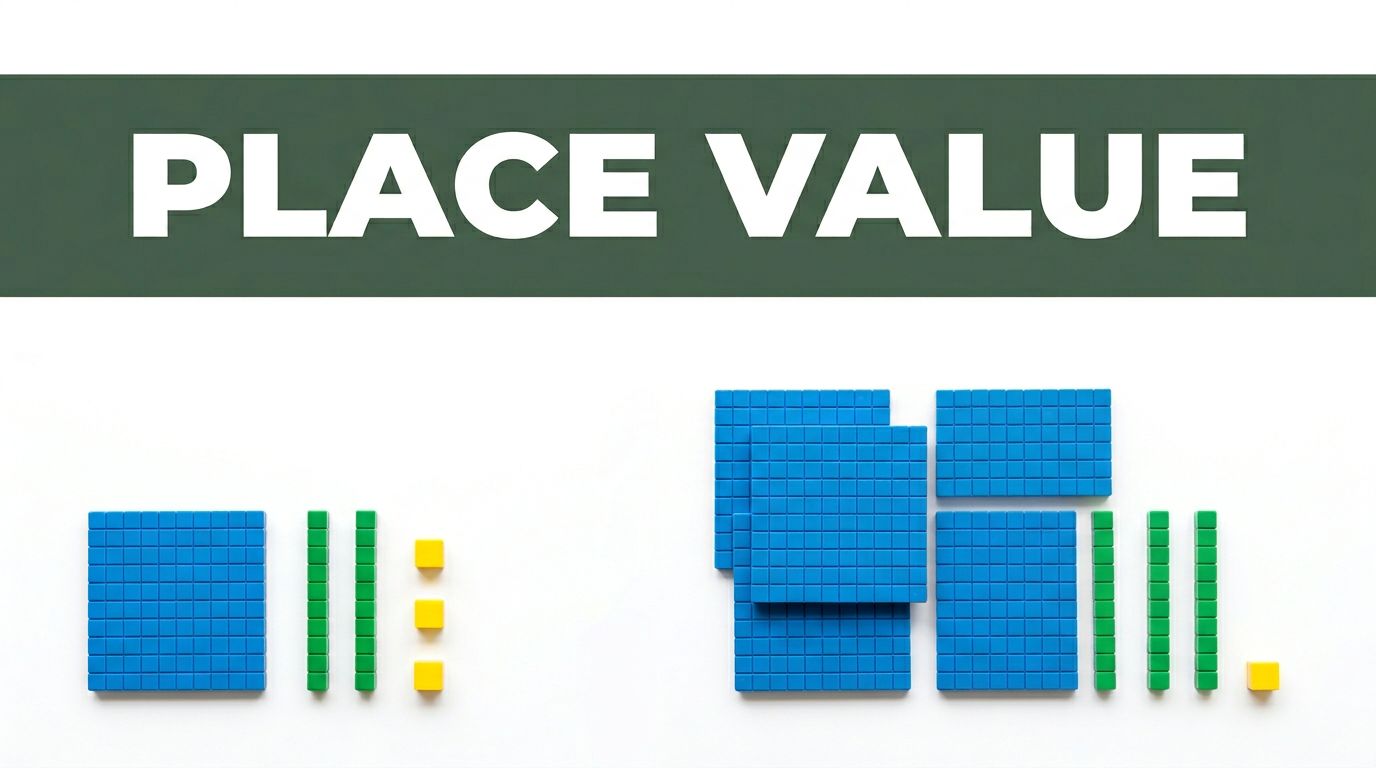
Have you ever stared at 123 and 321 and wondered why they’re not the same, even with identical digits? That’s place value at work; it decides if a digit means ones, tens, hundreds, or more. Without grasping it, math feels like a puzzle with missing pieces.
Many students hit roadblocks here. They mix up the 4 in 142 as just 4, not 40, which trips up addition, subtraction, and rounding. Experts call it a top cause of weak number sense from kindergarten through fifth grade, affecting daily tasks like counting money or splitting bills.
This post breaks it down simply for kids or adults. You’ll get the basics first, then hands-on visuals with base-10 blocks, fun games to practice, everyday examples, common pitfalls to dodge, and final tips for lasting success. Let’s start with the building blocks so you see numbers clearly.
Unlock the Secret Behind Every Digit’s Power
Each digit gets its strength from its spot in a number. Take 456, for example. The 4 sits in the hundreds place, so it means 400. Next, the 5 holds the tens spot at 50. Finally, the 6 in the ones place counts as 6. Add them up in expanded form: 400 + 50 + 6 = 456. Positions run right to left, starting with ones. Each spot jumps ten times bigger than the last.
You read it as “four hundred fifty-six” in word form. This setup powers our base-10 system. Zeros keep places open, like in 405 where zero tens means no 10s at all. Picture a simple place value chart with columns: ones, tens, hundreds, thousands. Digits sit above; their full values show below.

Real life mirrors this. Think money: 10 dimes equal one dollar, just like tens build hundreds. This base helps with operations and big numbers. Kids often build it with base-10 blocks for hands-on feel. Strong grasp here smooths math ahead.
See It in Action with a Simple Number Breakdown
Let’s pick 1,234 and break it down. Start from the left. The 1 in thousands means 1,000. Then 2 hundreds add 200. 3 tens make 30. 4 ones finish with 4.
Standard form stays 1,234. Expanded shows 1,000 + 200 + 30 + 4. Word form reads “one thousand two hundred thirty-four.” See the power? Swap spots to 4,321. Now it’s four thousand three hundred twenty-one, much bigger.
Base-10 blocks make this clear. One thousand cube stacks for 1,000. Two hundred flats cover 200. Three ten rods hit 30. Four units wrap it up.

For more on blocks, check Khan Academy’s place value blocks video. Hands-on practice sticks best.
Why Zeros Change Everything You Think About Numbers
Zeros act as placeholders. They hold spots without adding value. In 305, you get 3 hundreds or 300, zero tens, and 5 ones. No tens column fills up.
Base-10 blocks show an empty tens spot. Nothing bundles those 10 ones. So 305 skips tens entirely. This keeps the number straight.
Focus stays on whole numbers now. Decimals flip it later with points, but zeros still mark places. Confuse them early, and operations tangle. Practice with charts builds confidence. In short, zeros organize digits so math flows smooth.
Build Numbers Hands-On to Feel Place Value Deeply
You learn place value best by touching it. Grab some blocks or household items, and build numbers yourself. This turns abstract ideas into real stacks you can see and swap. Recent studies show hands-on tools boost math retention, especially when you link them to actual numbers. Teachers now mix groupable items like cubes with visual charts for all kids.
Grab Base-10 Blocks or Everyday Items to Start Building
Start with base-10 blocks. Small cubes stand for ones. Long rods make tens. Flat squares cover hundreds. They match the base-10 system perfectly because each level groups ten of the smaller ones.
No blocks nearby? Use straws or craft sticks. Bundle ten straws with a rubber band for a ten. Stack ten bundles for a hundred. Kids love this cheap fix at home. Or try a food twist: single nuggets as ones, packs of ten fries for tens, and burger stacks for hundreds.
Group ten ones into a ten rod. Then trade ten rods for a hundred flat. This shows decomposing and composing. For 359, grab three hundred flats, five ten rods, and nine cubes. Now swap to see it another way, like 200 + 150 + 9.
Follow these steps to build 247:
- Take two hundred flats for the 200.
- Add four ten rods for the 40.
- Place seven unit cubes for the 7.
- Line them up by place: hundreds left, then tens, then ones.
See how the spots give power? Fill a tens frame too, snapping ten cubes across before starting a new row. This builds grouping habits fast.

Print your own with these free base-10 block templates. Explicit visuals like these help every learner grasp big ideas.
Draw Your Own Place Value Chart for Quick Wins
Sketch a chart on paper or graph paper. Draw columns from right to left: ones, tens, hundreds, thousands. Label each top row. Add a bottom row for full values, like “1” under ones becomes “1,” but “1” under tens shows “10.”
Fill it with 359. Put 9 in ones (9 x 1 = 9), 5 in tens (5 x 10 = 50), 3 in hundreds (3 x 100 = 300). Color-code places: yellow ones, blue tens, green hundreds. Colors stick in your mind.
Make it fun and interactive. Fold paper into kites or flaps that pop up to reveal values. Or cut foldables where digits lift to show expanded form. Hang a poster version on the wall for quick checks.
Graph paper aligns digits neat, so you spot patterns easy. Practice 1,234: 4 ones, 3 tens (30), 2 hundreds (200), 1 thousand (1,000). Total matches.
Grab a ready-made one from free printable place value charts. These tools speed up wins because you see trades and zeros clear. In short, your chart becomes a personal math coach.
Master Place Value Through Games and Daily Fun
Games turn place value drills into excitement. Kids stay engaged without boredom because they race, chain clues, and build numbers together. Short 10-15 minute sessions work at home or in class. Recent trends show hands-on games like these beat apps for deep understanding. Players explain their choices, so reasoning sticks. Start with these two favorites to see quick wins.
Roll Dice and Race to Build the Biggest Number
Teams line up for this dice relay. Each player rolls a die, then picks a spot in their team’s number, like thousands or ones. They aim for the largest number first, so place high digits left. Next round flips to smallest.
Here’s how to play in simple steps:
- Split into teams of four or five. Give each a place value chart with four spots: thousands, hundreds, tens, ones.
- First player rolls, shouts the digit, and writes it in the best spot for biggest number. Example: Roll a 6, put it in thousands.
- Teammate runs up, rolls, adds to an empty spot. No erasing.
- When charts fill, write the number in standard form, expanded form, and word form. Score points: 10 for biggest overall, plus bonuses for correct forms.
Switch to smallest number next. Compare teams: Why did 9,872 beat 8,792? The thousands digit won. High fives follow wins.

Grab free printable place value dice games to start today. Kids beg for more rounds because competition sparks joy.
Chain Clues in the I Have, Who Has Game
This card chain builds speed and listening skills. Cards show numbers in mixed forms: standard like 3,204, expanded as 3,000 + 200 + 0 + 4, or word like “three thousand two hundred four.” One side says “I have…” the other “Who has…?”
Everyone stands in a circle. First kid reads “I have 1,456. Who has four thousand fifty?” Next person checks their card. Match starts the chain. Go until all link up.
For 4-digit practice, use bigger numbers. Miss a clue? Whole class helps explain the form. Time rounds for fun. Why great? It reviews all forms at once, so zeros and places pop.
Print sets for two-digit up to thousands. Adapt by adding decimals later.

Download free place value I Have, Who Has cards for instant play. Chains close faster each time, proving mastery.
Dodge These Sneaky Mistakes That Trip Up Everyone
Even after hands-on fun and games, place value trips kids up in sneaky ways. They ignore bundling, skip zeros, overload on worksheets, or read numbers wrong. These errors stick because they miss the “why” behind spots. For example, a child sees 307 as thirty-seven, dropping the zero. Or they treat the 3 in 35 as three, not thirty. Recent data shows these hit grades K-5 hard, messing up addition and rounding later. So always start with blocks, add daily talk, and check with quick tickets. Link it to multiplication too: each left spot multiplies the right by ten. Older kids need reactivation. Spot these four big ones and fix them fast.

Skip Worksheets Alone and Go Hands-On Instead
Worksheets bore kids fast. They fill blanks without feeling why a digit jumps value by place. No deep sense builds, so errors repeat. Hands-on blocks fix that. They let kids bundle ten ones into a ten rod, then trade for hundreds. You see the power right away.
Replace drills with games and stacks. Start slow: build 25 as two tens plus five ones. Then decompose: swap a ten for ten ones. This shows flexibility. Recent trends back it; manipulatives catch flaws like ignoring bundles early. Teachers mix them daily before paper work.
In addition, everyday items work great. Bundle pennies for ones, dimes for tens. Or use cups: one cup holds ten beans. Fill ten cups for hundreds. Kids grasp trades without boredom. Check progress with exit tickets: “Build 142 three ways.” Strong starts here smooth multiplication links too.

Try these hands-on place value activities for second grade. They spark real understanding.
Practice Reading Numbers Aloud Every Single Day
Poor reading causes flips and skips. Kids say “twenty-five” but write 52. Or they rush “one hundred five” as 15. No wonder places mix up. Daily aloud practice fixes it through math talk.
Pick a number of the day, like 1,234. Read it standard, expanded, and word form. Ask: “What spot holds the 2?” Class choruses back. Rotate kids to lead. This builds vocab: place means spot, value means full worth like ones or tens.
Meanwhile, add routines. Post the number on the board each morning. Break it: “One thousand two hundred thirty-four equals 1,000 plus 200 plus 30 plus 4.” Discuss zeros: why 1,204 skips tens. Short chats reveal gaps fast. Upper grades refresh with bigger numbers.
Most importantly, pair it with writing. Say it, write it three ways, then trade papers to check aloud. Errors drop quick. Data shows choral counts cross boundaries smooth, like 199 to 200.
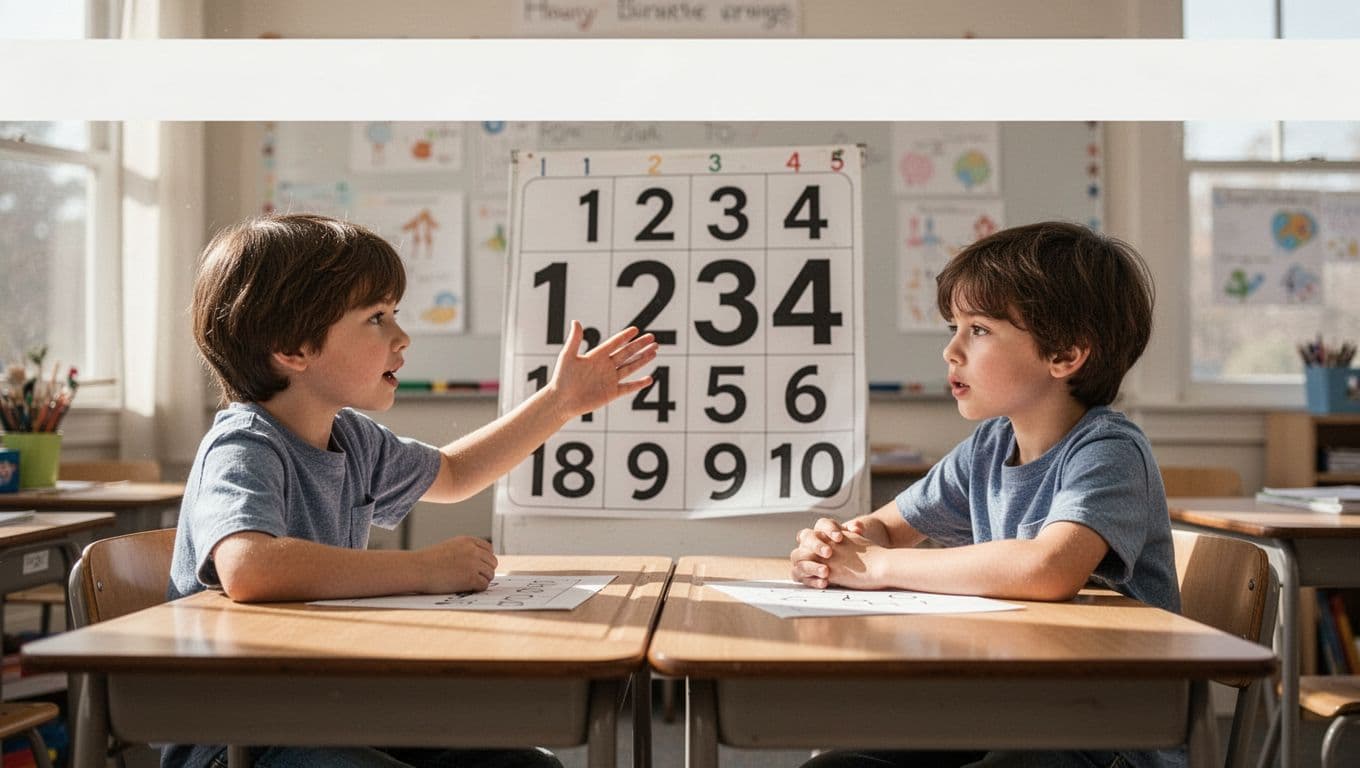
Download a free number of the day routine for easy starts. Voices make places stick forever. For more on misconceptions, see these common place value errors.
Conclusion
You now hold the tools to master place value. Start with basics like charts and base-10 blocks. Then add games and daily reads to dodge mistakes. Hands-on practice makes digits’ power click forever.
These steps build math confidence fast. Studies show strong place value links to better scores in addition and beyond. In addition, it sharpens real skills like budgeting money or reading prices right.
Grab blocks or a chart today. Play the dice race with kids or family. Share your wins in the comments below. Clear place value opens doors to multiplication, decimals, and big math ahead.