
One tiny slip in algebra can drop your test score from an A to a C. Picture Sarah, a sharp high school freshman who aced every quiz until midterms. She combined terms wrong on simplifying problems and lost half her points. Sound familiar? Common mistakes in algebra trip up even smart students. Recent NAEP data shows only 28% of 8th graders hit proficient levels in math, with algebra basics like expressions and equations causing most stumbles.
High schoolers face these issues daily because small habits build bad results. Rushing leads to errors in signs or balancing. The good news? You can fix them fast with simple checks. This guide covers the top 10 pitfalls, from simplifying expressions to solving inequalities. Each includes a clear example and quick fix at an 8th grade level.
Follow these tips, and you’ll solve problems with confidence. Your grades will climb as you spot errors before they happen. Let’s start with simplifying, where most headaches begin.
Simplify Expressions Flawlessly by Avoiding These Blunders
Simplifying expressions sparks early algebra woes because students rush patterns. You skip steps or mix terms, so answers look wrong. Mastering these five fixes builds a rock-solid base for tougher work. You got this; slow down and check each one.
For deeper tips on these slip-ups, check 5 common mistakes in algebraic expressions and fixes.
The Like Terms Trap and How to Escape It
Students often combine unlike terms. They see 3a + 2 and write 5a. That’s wrong because like terms share the same variable. The constant 2 stands alone.
Only add matching parts, so 3a + 2a equals 5a. Circle variables first to spot matches. Think of it like grouping apples and oranges; you don’t mix fruits.
Practice now: simplify 4x + 3 + 2x – 1. Combine 4x and 2x to 6x, then 3 and -1 to 2. Result? 6x + 2. Easy when you match carefully.

Handle Negative Signs Without Panic
Negatives fool many. Take 2x – 4(3x – 3). Some do 2x – 12x – 12, skipping the flip inside. Wrong; the -4 hits both terms.
Distribute properly: -4 times 3x is -12x, and -4 times -3 is +12. So it becomes 2x – 12x + 12, or -10x + 12.
Whisper “negative touches all” as you go. Step one: write the expression. Step two: multiply -4 by 3x. Step three: multiply -4 by -3. Done right every time.
Distribute Fully to Beat Skipping Errors
Another trap: partial distribution. Folks write 3(2x + 5) as 6x + 5. They forget the 3 times 5, which is 15.
The multiplier touches every term inside. Point to each one and multiply. For binomials, think multiply all parts.
Try 2(x + 4). That’s 2x + 8. Hit the x and the 4. No skips.
Square Binomials Correctly Every Time
Squaring trips people up. (x + 3)^2 becomes x^2 + 9? No. You miss the middle.
Use the formula: (a + b)^2 = a^2 + 2ab + b^2. So x^2 + 6x + 9. For (x – 3)^2, it’s x^2 – 6x + 9.
Always expand fully. Picture a square’s area; sides multiply across. Never square parts alone.
Separate Coefficients from Exponents Clearly
Confusion hits here: treat 2x^2 as (2x)^2, so 4x^2. Wrong. Exponents apply only to the variable.
It’s 2 times x squared, or 2 * x * x. Coefficients stay outside. Read it aloud: “two times x squared.”
Expand to confirm: 2x^2 means two groups of x * x.
Solve Equations and Fractions Like a Pro
Now shift to solving, where mistakes pile up. Fractions and balances go wrong fast. The goal stays simple: keep both sides equal. Treat them the same always. Slow steps boost accuracy. Preview three big pitfalls ahead.
See more on common algebra test mistakes.
Cancel Factors, Not Addends in Fractions
Canceling added terms kills answers. (x + 3)/(x + 4) to 3/4? Nope. You cancel multiplied factors only.
Ask: “Are they multiplied?” In (x * 2)/(x * 3), yes; cancels to 2/3. But added? Leave alone.
Example: 6x / 3x = 2, since 6/3 = 2 and x/x = 1. Proper cancel saves time.
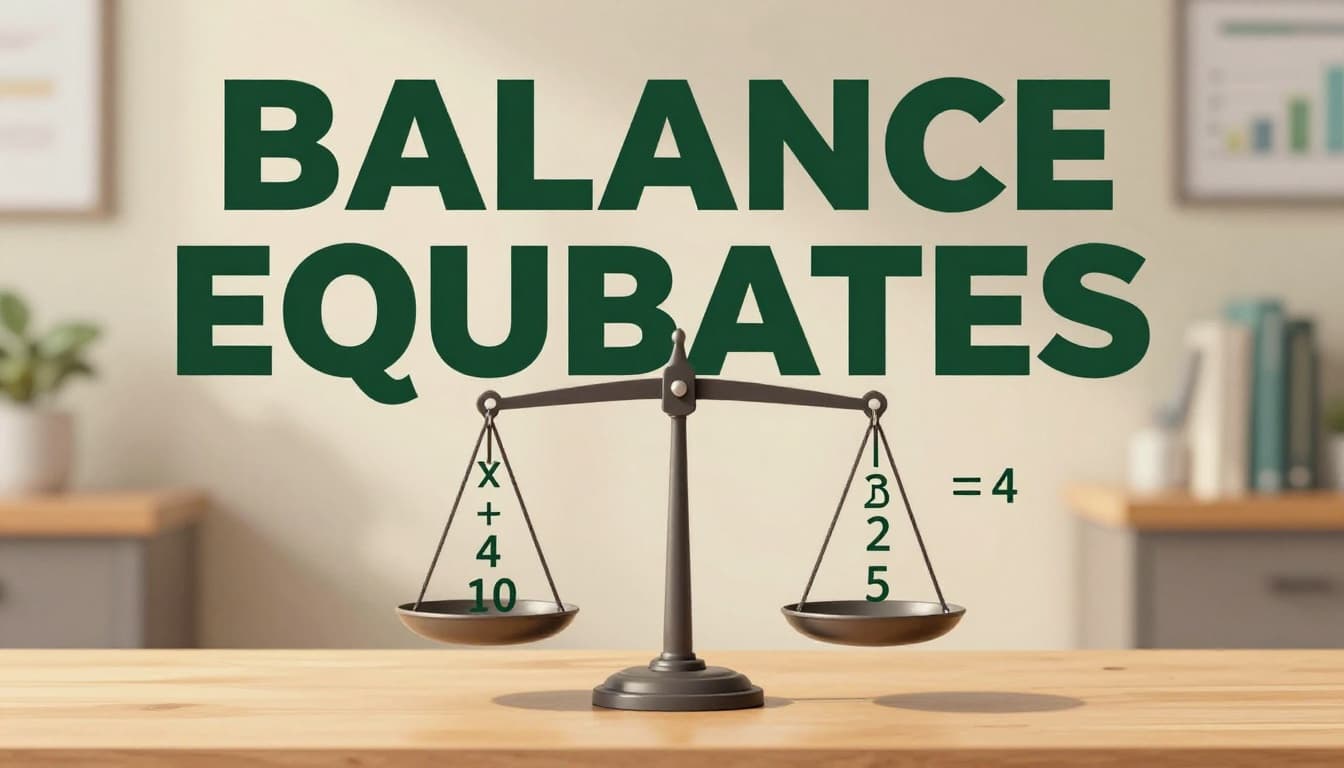
Balance Equations by Hitting All Terms
Apply changes to one spot only? Big error. In 2x + 4 = 10, subtract 4 from left alone? No.
Hit both sides: 2x + 4 – 4 = 10 – 4, so 2x = 6. Then divide all by 2: x = 3.
Check balance after each move. Scales tip otherwise.
Catch Both Solutions in Squared Equations
x^2 = 9 gives x = 3? Misses half. (-3)^2 = 9 too.
Take positive and negative roots for even powers. Write ±3. For x^2 = 16, x = ±4.
Always check both; problems hide negatives.
Tackle Inequalities and Verify to Perfection
Final spots prove tricky: inequalities and checks. They mimic equations, but signs flip sometimes. Verify seals wins. Here are two must-knows.
Learn about common mistakes when solving inequalities.
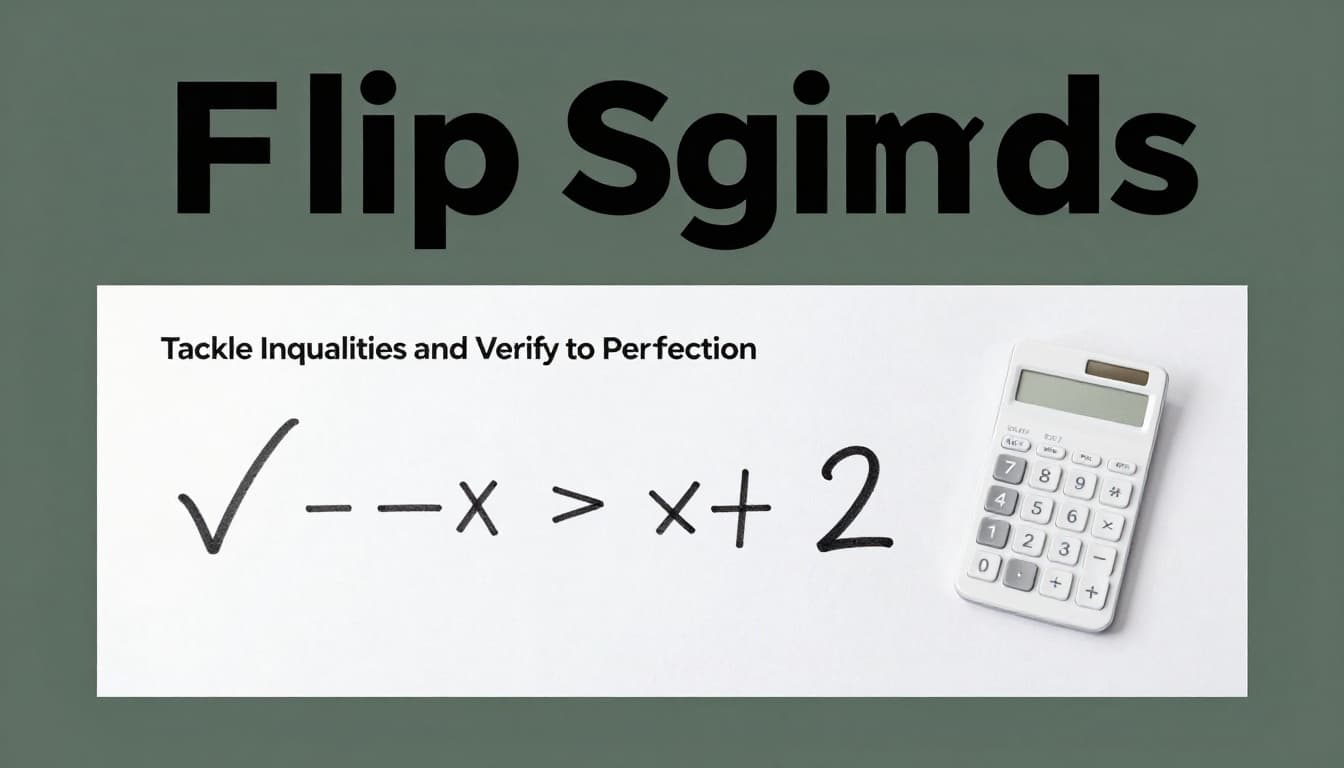
Flip Signs Right When Using Negatives
Multiply by negative without flip? Wrong. -3(x < 5) stays < ? No, it becomes > .
Reverse < or > on multiply or divide by negative. Solve -2x > 8: divide by -2, flip to x < -4.
Step one: divide both by -2. Step two: flip sign. Step three: simplify.
 8 solved by flipping the sign to x
 Check Answers to Spot Hidden Errors
Plug back in last. Biggest time-saver. For 2x + 3 = 7, x = 2? Substitute: 4 + 3 = 7. True.
Catches slips fast. Do it always; takes seconds. Errors hide without this.
Key Takeaways to Master Algebra
You now know fixes for simplifying blunders like like terms and negatives, equation traps in fractions and balances, plus inequality flips and checks. Group them: watch distributions first, balance next, verify always.
Practice daily builds speed. Write every step. Understand the why behind rules. Review work before submit. Take your time; accuracy beats rush.
Share your biggest algebra win in the comments. Try one problem today. Avoid these algebra mistakes forever, and watch scores soar. You’ve got the tools; go boost those grades.