Picture this: you split a restaurant bill with friends, but one forgot their share. Quick math saves the day. Or plan a road trip budget, gas prices fluctuate, miles add up. Basic algebra uses letters for unknown numbers. It solves these everyday puzzles.
You need it for school grades, job skills, even budgeting life. This post starts with key concepts. Then it covers one-step and two-step equations with examples. Next come multi-step challenges and word problems. Finally, tips boost your game. Follow these clear steps at an 8th-grade level. Grab a notebook, try each example.
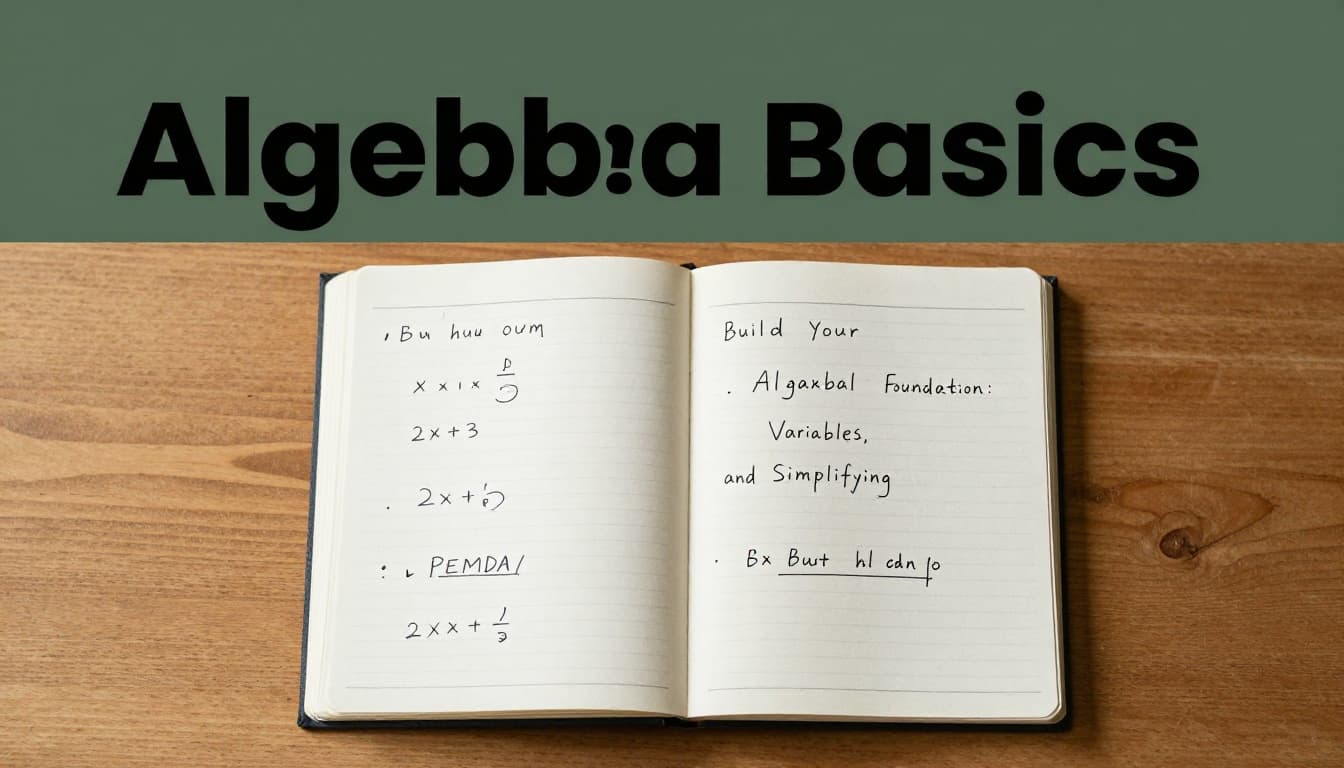
Build Your Algebra Foundation: Variables, Order, and Simplifying
Core ideas prevent mix-ups later. Variables like x or y stand for unknowns. Constants are plain numbers. Terms split by plus or minus signs. Expressions lack an equals sign, such as 2x + 3.
Think of expressions like a grocery list: group apples with apples. First, master order of operations. Use PEMDAS. That means Parentheses first. Then Exponents. Next, Multiply or Divide left to right. Finally, Add or Subtract left to right.
Take 3(2 + 1) + x = 10. Parentheses give 3(3) + x = 10. Multiply yields 9 + x = 10. Add to isolate x. For details on PEMDAS, check National University Library’s order of operations guide.
Spot and Use Variables and Expressions
Variables pop up everywhere. Say x apples cost $2. That’s the variable in action. An expression like 4n + 7 means four times a number plus seven.
Equations have an equals sign. Expressions do not. Read left to right always. For example, x + 2 describes twice as many cookies. No, wait: build it as 2x for twice a number.
Another: y – 5 for five less than a number. Practice spotting them. This builds speed.
Never Forget PEMDAS: The Order That Saves Your Answers
PEMDAS keeps answers right. Please Excuse My Dear Aunt Sally works as a mnemonic. Now solve (3 + 2) * 4^2 / 2 – 1.
Parentheses first: 5 * 4^2 / 2 – 1. Exponents: 5 * 16 / 2 – 1. Multiply and divide left to right: 80 / 2 – 1 = 40 – 1 = 39. Wait, check: actually 5*16=80, 80/2=40, 40-1=39.
Skip parentheses? You get wrong results. Always start there.
Combine Like Terms to Clean Up Messy Problems
Messy expressions simplify fast. Take -7x + 2 + 3x – 5. Group like terms: (-7x + 3x) + (2 – 5). That’s -4x + (-3), or -4x – 3.
Why only like terms? Apples add to apples, not oranges. Practice: 2x + 5 – x + 1. Group (2x – x) + (5 + 1) = x + 6.
Ready for equations? This foundation makes them simple.
Solve One-Step Equations: Quick and Easy Wins
One-step equations use one operation. Isolate the variable with its inverse. Addition pairs with subtraction. Multiplication pairs with division.
Both sides stay balanced, like a scale. Example: x / 120 = 3. Multiply both by 120. x = 360. Check: 360 / 120 = 3, yes.
See more examples at ChiliMath’s one-step equations lesson.
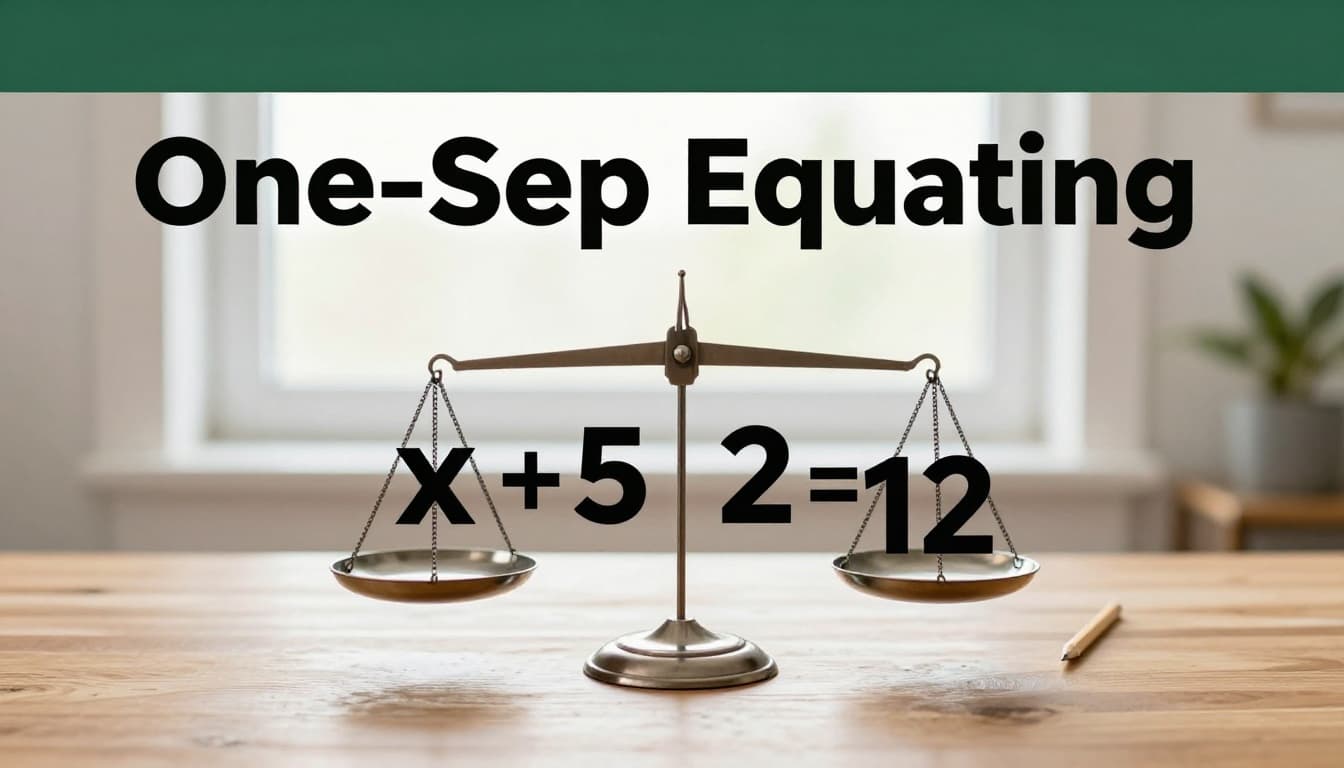
Try 7 + y = 15. Subtract 7 from both. y = 8. Feels good, right? Like undoing a recipe step.
Addition and Subtraction Equations
Start with x + 7 = 10. Subtract 7 both sides. x = 3. Plug back: 3 + 7 = 10, correct.
Now 15 – y = 6. Add y both sides first? No. Add 15 to both: 15 – y + 15 = 6 + 15. Better: subtract 6 from both? Isolate y. Actually, add y to both? Standard: add 15 to both sides: 15 = 6 + y. Then y = 9.
Verify: 15 – 9 = 6. Steps clear now.
Multiplication and Division Equations
3z = 21. Divide by 3. z = 7. Check works.
z / 4 = 5. Multiply by 4. z = 20. Watch negatives: -2m = 10 becomes m = -5.
You got this. One step at a time.
Crack Two-Step Equations Without Breaking a Sweat
Two steps mean two operations. Undo in reverse: addition or subtraction first, then multiply or divide.
Example: y / 6 – 3 = -11. Add 3 both sides: y / 6 = -8. Multiply by 6: y = -48. Balance holds.
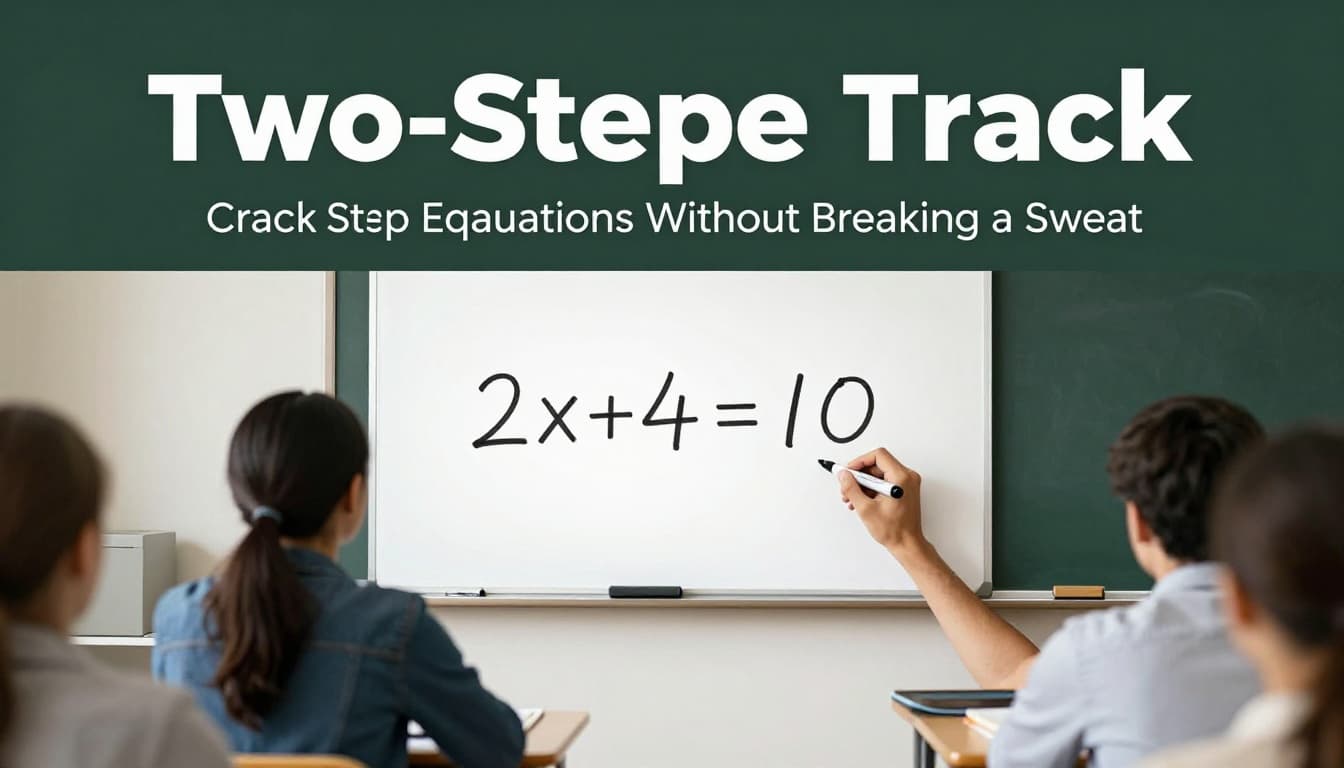
Another: 2x + 4 = 10. Subtract 4: 2x = 6. Divide by 2: x = 3. For beginners, see ChiliMath’s two-step guide.
Order matters. Imagine a locked box inside another. Unlock outer first.
The Reverse Order Trick for Success
Always handle add/subtract before multiply/divide. For 5 – x/2 = 1, multiply first? No. Add x/2 both sides? Better: add 5? Wait, isolate: multiply by 2 first sometimes adjusts.
Standard: 2(5 – x/2) no. For this, add x/2: 5 = 1 + x/2. Subtract 1: 4 = x/2. Multiply 2: x=8.
Visualize steps on a scale tipping back.
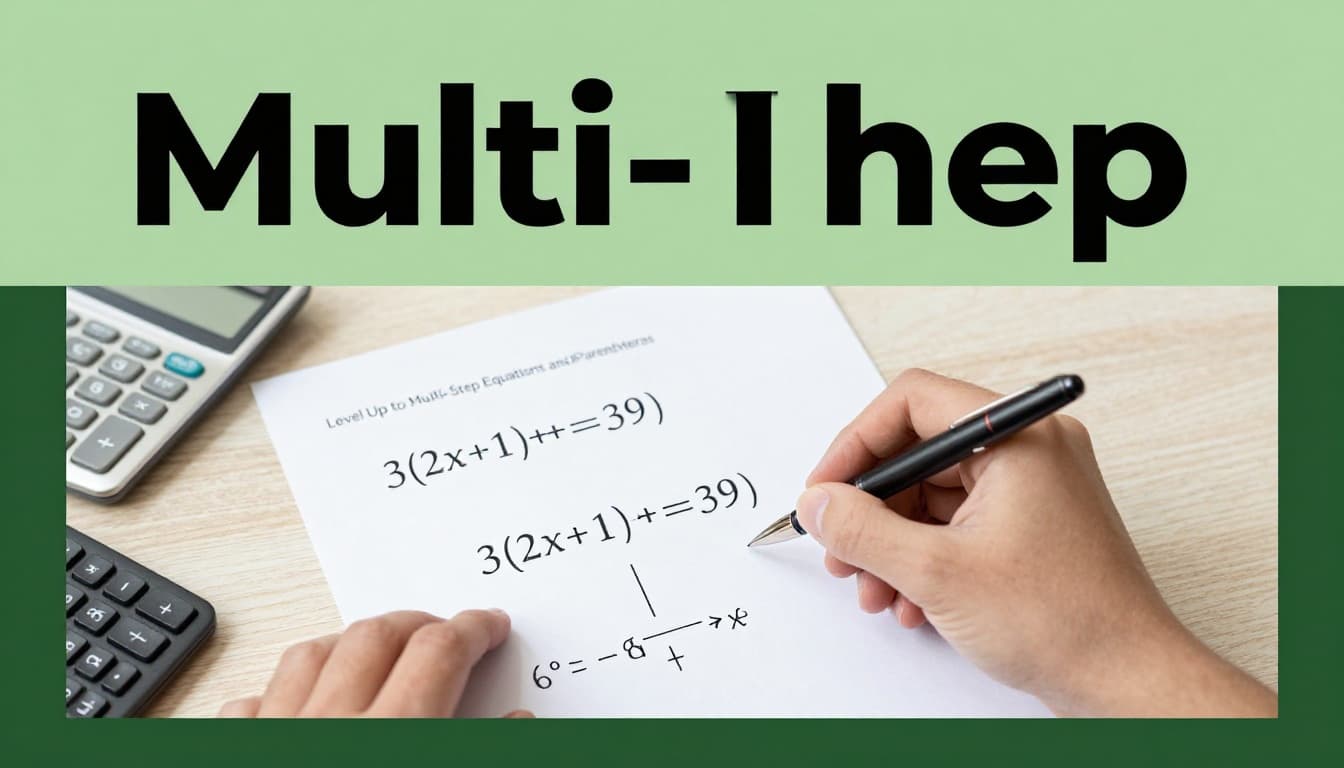
Level Up to Multi-Step Equations and Parentheses
Variables on both sides? Move them first. Parentheses? Distribute.
Take -2x – 34 = 98 – 5x. Add 5x both: 3x – 34 = 98. Add 34: 3x = 132. Divide 3: x = 44.
Now 3(2x + 1) + x = -39. Distribute: 6x + 3 + x = -39. Combine: 7x + 3 = -39. Subtract 3: 7x = -42. Divide 7: x = -6.
Verify each time.
Get Variables on One Side First
Add or subtract variables across equals. Like above, 5x moved over.
Distribute and Combine in Parentheses Problems
Distribute multiplies every term inside. 2(x + 3) = 2x + 6. Then combine.
Turn Everyday Word Problems into Algebra Gold
Words hide equations. “Times” means multiply. “Increased by” adds.
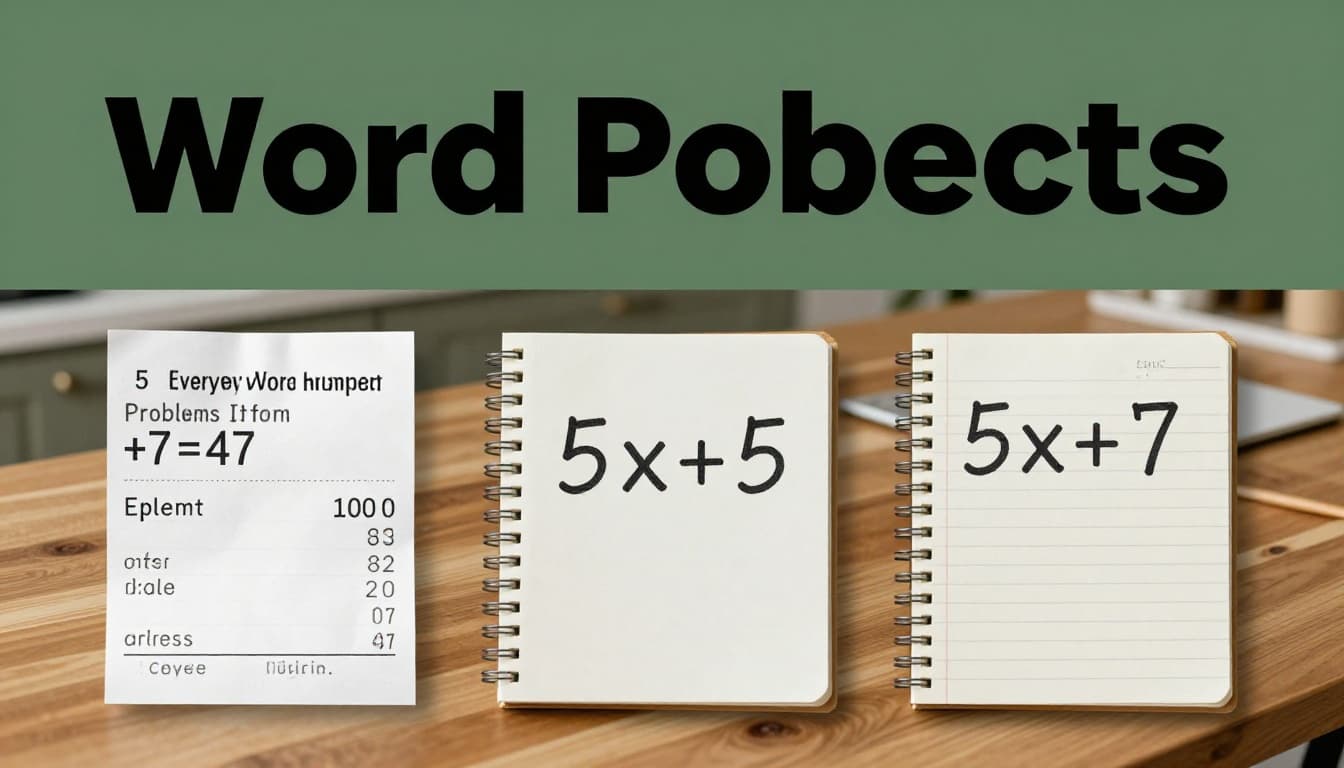
Five times a number plus 7 equals 47. Let x be the number. 5x + 7 = 47. Subtract 7: 5x = 40. x = 8.
Twice a number minus 3 is 7: 2x – 3 = 7. Add 3: 2x = 10. x = 5. See more at HubPages word problem examples.
Steps: define variable. Write equation. Solve. Check words.
Shopping totals or sports scores fit perfect.
Bonus Challenges: Fractions, Exponents, and Common Mistakes
Fractions challenge: (3/8)^2 + 3(0.025) = 9/64 + 0.075. Common denominator 320: (9/64=45/320), (0.075=24/320), total 69/320.
Pitfalls: forget negatives, skip order, bad distribute. Check LibreTexts on algebra mistakes.
Pro tips: verify answers. Practice daily. Sites like Khan Academy offer free worksheets.
You built skills now. Foundations, equation steps, words to math all click.
Practice these: x + 4 = 9; 3y – 2 = 7; twice z is 12. Share wins below. Subscribe for math tips. Algebra unlocks geometry, coding, finance. Go solve.