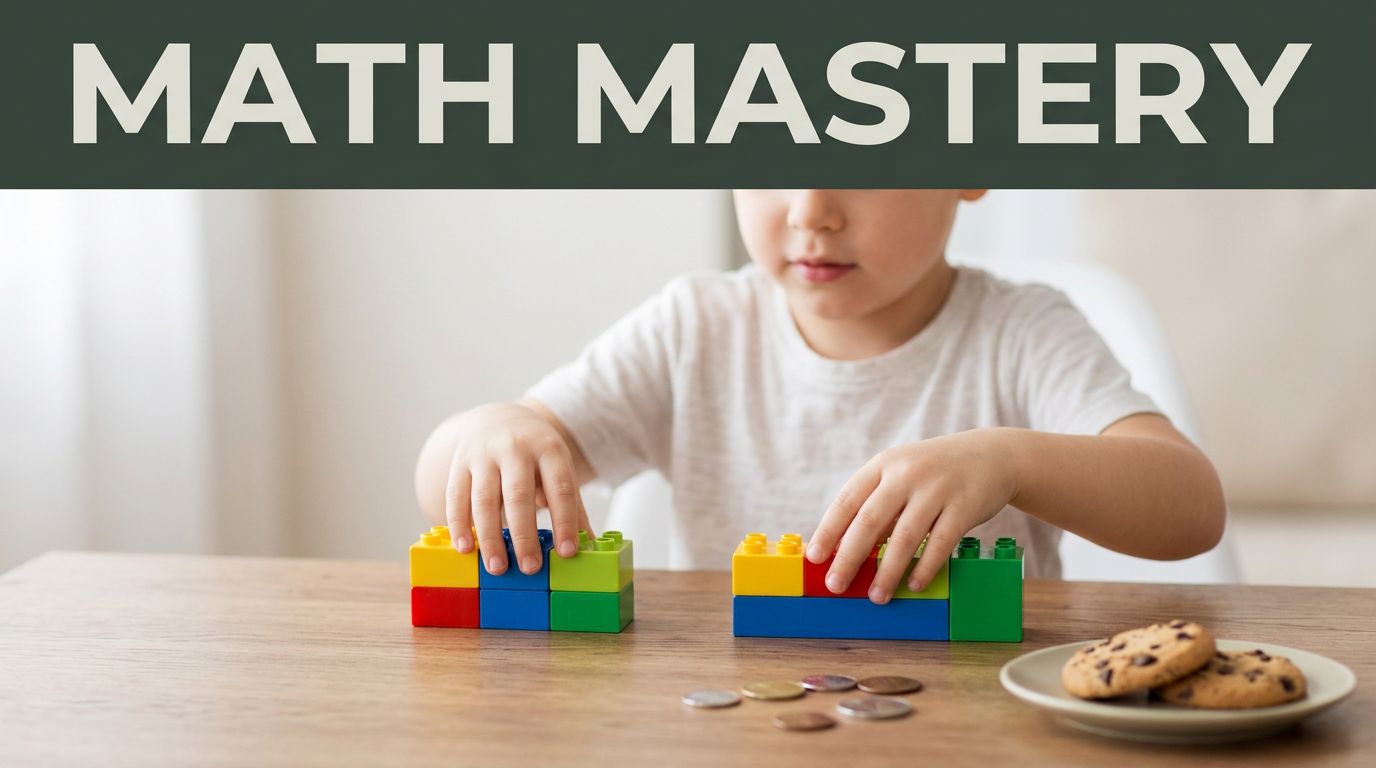
Picture your child fumbling with coins at the store or splitting cookies with friends. Those moments highlight how addition and subtraction skills trip up many kids. Yet these basics underpin all math success, from budgeting to science.
Strong skills here mean quicker thinking and less frustration later. Recent studies confirm hands-on methods beat screens for building number sense. Kids using blocks grasp addition better because they touch and group real items.
This guide walks you through a proven path. Start with physical objects, add visuals, learn mental tricks, then games and apps. You’ll see gains fast. Discover how to boost addition and subtraction skills step by step for kids and beginners.
Build a Rock-Solid Foundation Using Hands-On Manipulatives
Kids learn best by touching numbers first. Use blocks, beans, or fingers to turn abstract ideas concrete. Research from 2026 shows physical tools like these boost math scores more than tablets. Children move items, join groups, and count totals. This builds confidence over worksheets.
Do short sessions, 10 to 15 minutes daily. Tie to real life, like sharing snacks. Follow the Build, Write, Say method. Build the groups, write the equation, then say it aloud. Parents guide gently: “Show me four blocks plus three.” This avoids tears and teaches one-to-one counting.
For more ideas on math manipulatives, check Prodigy Game’s list of hands-on tools.
Simple Addition Activities with Everyday Objects
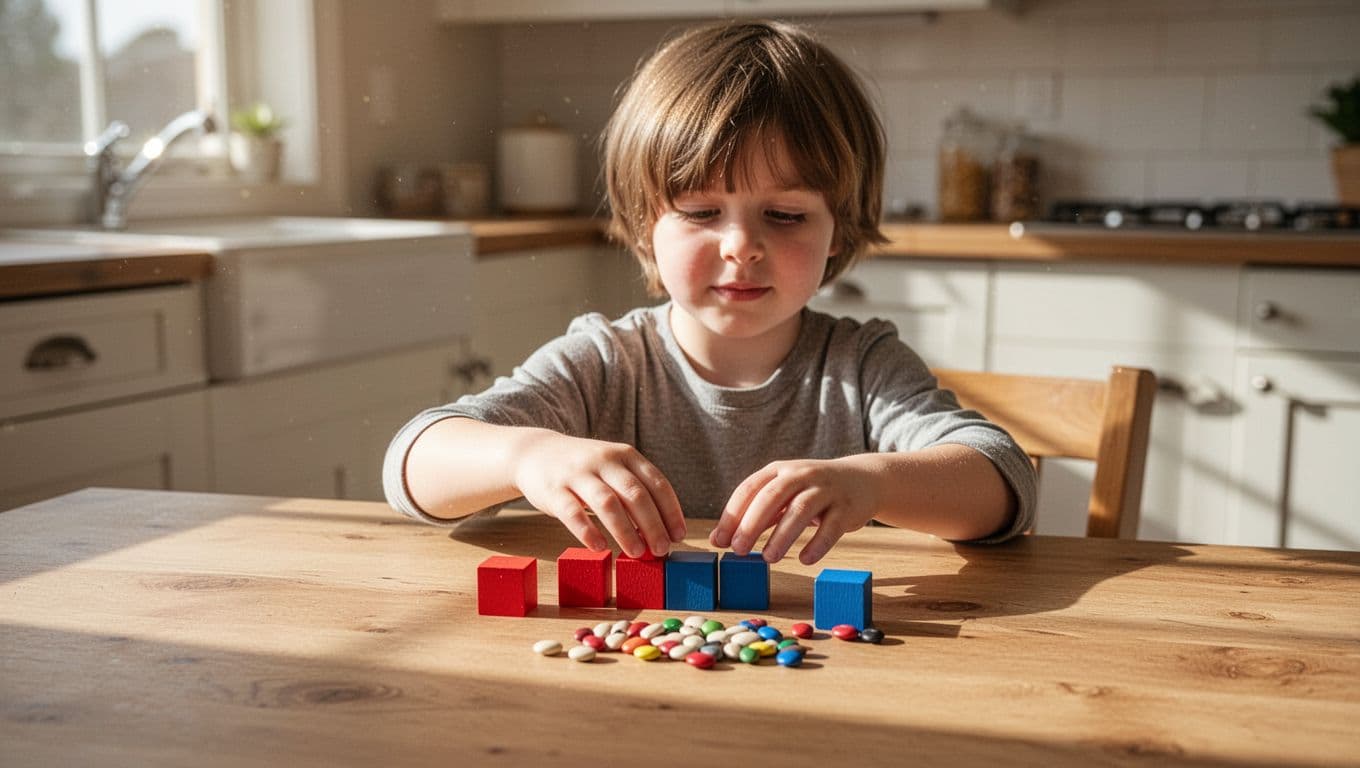
Grab fingers for easy starts. Hold up three, add two more: count all five together. Next, beans work great. Scoop five plus four into a bowl. Count on from five after a bit.
Group in fives to prep skip counting. Say to your child, “Put five red beans here, add four blue. How many now?” They count aloud. This shifts from slow tallying. Practice daily; fluency grows quick.
Hands-On Ways to Practice Subtraction Without Tears
Start with a pile, like eight toys. Take away three; count what’s left. Make stories: “You have six cookies. Eat two. How many stay?” Kids remove items themselves.
Link to addition as reverse. Seven minus two equals five because five plus two makes seven. Stay small; rushing big numbers confuses. Praise efforts: “You took away right!”
Unlock Visual Tools to See Math in Action
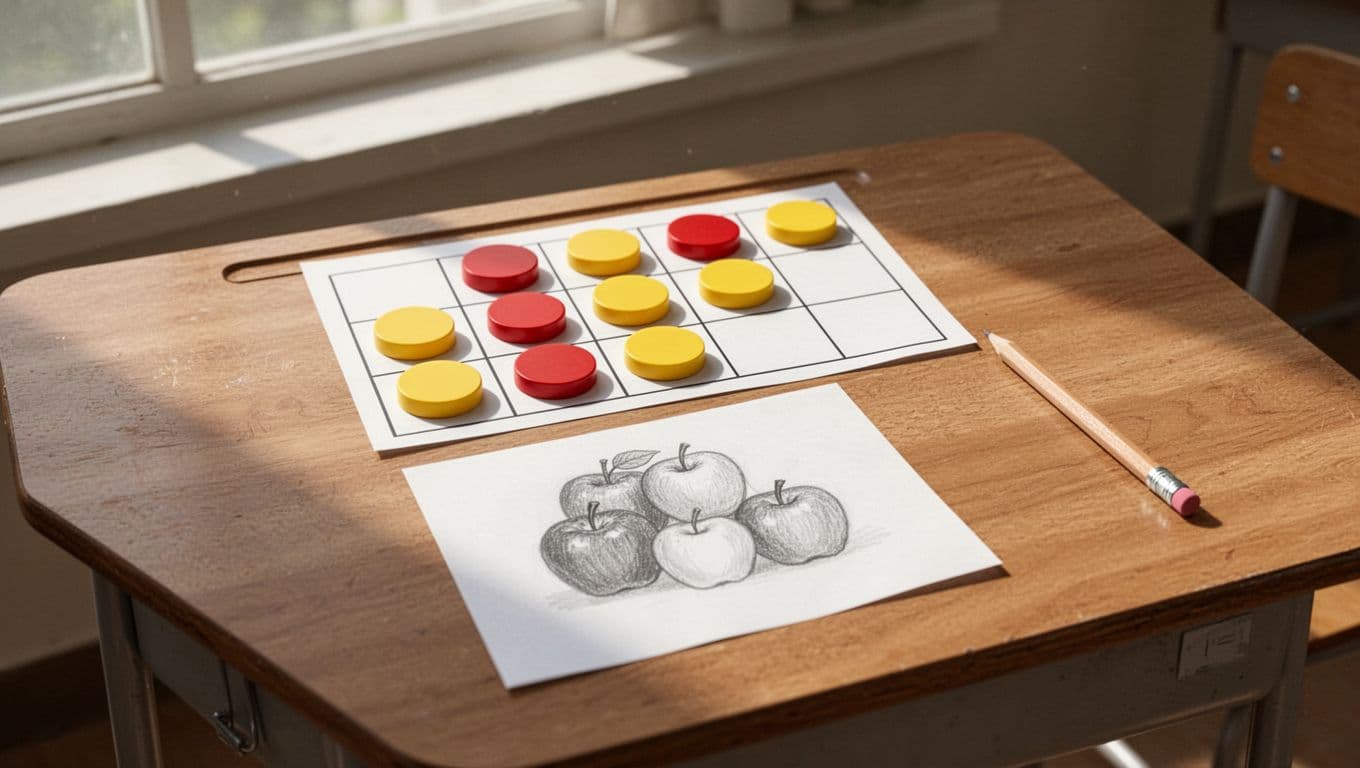
Once hands-on feels solid, draw pictures or use frames. These show numbers clearly. Ten frames help spot sums to 10 fast, like six plus four filling boxes. Tally marks group fives for speed.
Number bonds reveal parts of a whole, such as three plus four equals seven. Studies back visuals for deeper grasp. Sketch apples before equations. This links to mental pictures kids recall later.
Learn more about using ten frames for early addition.
How Ten Frames and Drawings Make Numbers Click
Draw two rows of five boxes. Fill six with dots, add four more. See the full ten quick. For bigger, use two frames. Sketch five birds, add three flying in.
Free printables abound online. Apps mimic them too. Practice within 10 first, then teens. Kids subitize amounts without slow counting.
Tally Marks and Number Bonds for Quick Insights
Draw four lines, cross the fifth. Groups of five speed fluency. For bonds, circle seven dots. Split into three and four inside.
This shows fact families: if five plus three equals eight, then eight minus three equals five. Include zero: ten minus ten equals zero. Visuals stick facts firm.
Master Mental Strategies for Fast, Confident Calculations
Brain tricks follow visuals. Count on from the larger number, not zero. Doubles like six plus six equal twelve anchor others. Make tens first for speed.
Practice facts zero to ten daily. Short bursts, two to ten minutes, work best per research. Tie to life: stairs for counting up, pizza slices for parts. Ask, “How did you get that?” Kids explain and own it.
Counting On and Back to Skip Slow Finger Counting
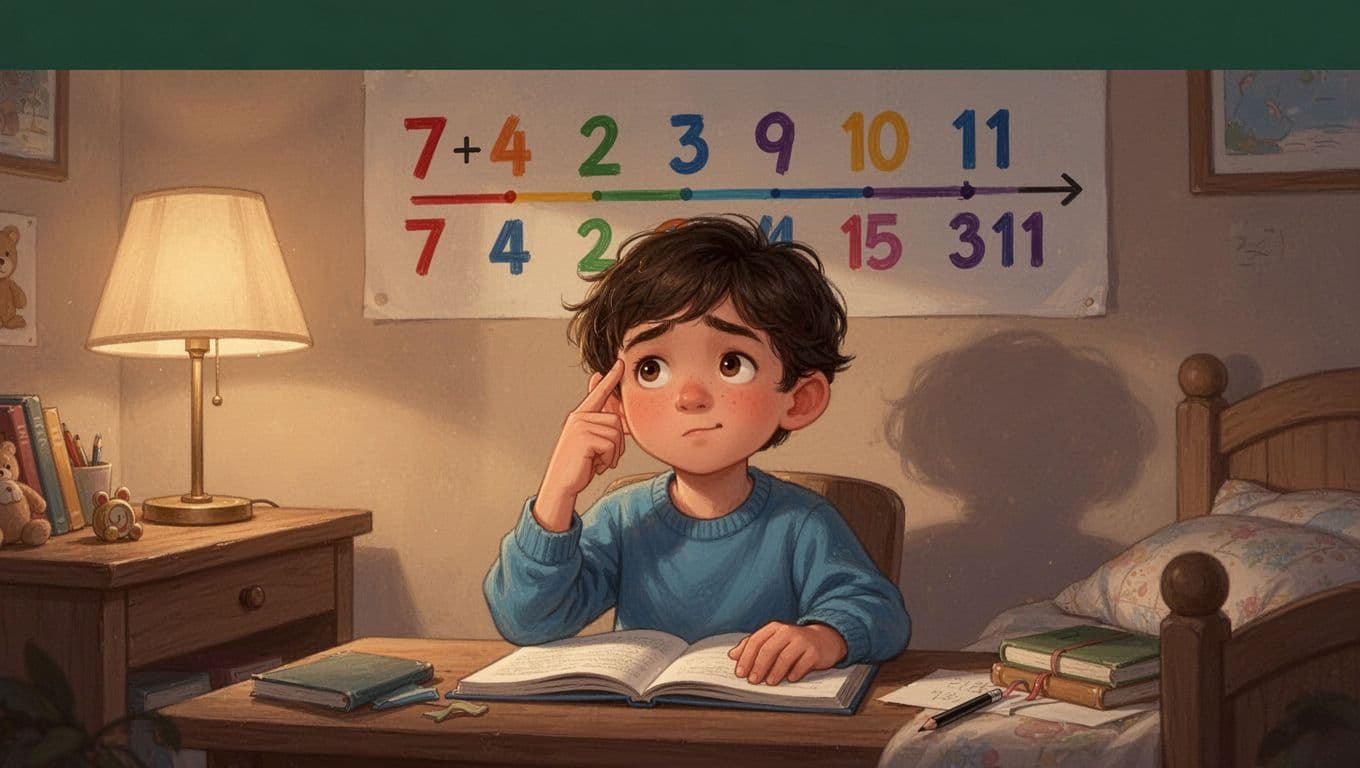
For seven plus four, start at seven: eight, nine, ten, eleven. Use a number line drawing. Subtraction reverses: twelve minus three counts back to nine.
Fix errors by always starting from the known number. Fingers help at first, then fade them. Practice aloud boosts recall.
Doubles, Near Doubles, and Making 10 for Speed
Know doubles: four plus four is eight. Near doubles adjust: four plus five is nine. For seven plus six, make ten first: seven plus three is ten, plus three more is thirteen.
Play quick games. Roll dice for doubles. Drill without drill feel; fun sticks it.
Supercharge Learning with Games, Apps, and Progress Tracking
Games make practice stick. Roll dice, add numbers. Play card war: higher cards add up. Stories turn problems real.
Top apps like Prodigy lead 2026 lists. It adapts quests to skill, boosting fluency with Common Core alignment. SplashLearn offers games for facts. Limit to 10-20 minutes daily. Track weekly tests within 10; celebrate jumps.
See top math apps reviewed for kids.

Fun DIY Games and Real-Life Challenges
Roll two dice, add for score. Twist board games: move by sums. Draw word problems first, act them out. Groups share strategies.
Challenges like counting change build ties. Play beats rote every time.
Best Apps and Digital Tools Backed by Research
Prodigy engages with quests; free core, premium reports progress. SplashLearn personalizes paths. Khan Academy Kids suits youngest, free always. Pair with hands-on for balance.
Studies show games lift percentiles. Track dashboards spot weak spots.
Steer Clear of Common Mistakes and Measure Your Wins
Pitfalls slow progress. Here’s a quick guide:
| Common Mistake | Quick Fix |
|---|---|
| Always count from one | Teach counting on from larger number |
| Skip zero facts | Practice ten minus zero daily |
| Worksheet overload | Swap for 80% games and manipulatives |
| Ignore word problems | Draw pictures first, act out |
| Rush regrouping | Use base-10 blocks to show trading |
Adjust pace to child. Success signs: instant facts to 10, explains strategies. Weekly timings measure fluency.
Hands-on starts lead to mental speed and fun wins. Your child heads to math confidence. Pick one activity today. Track a week, share what clicks. Persistence turns struggles to strengths.