
You stare at a math word problem. Kids at a party eat pizza and cake. How many slices total? Your brain mixes up who ate what. Add? Subtract? You pick the wrong number and get stuck.
These problems trip up most students. They cause frustration because the story hides the math. But you can solve math word problems without getting confused. Teachers in 2026 share simple steps that work. Read smart. Visualize the action. Choose operations wisely. Check your work. Students see better grades and handle real-life math with ease, like budgeting trips or sharing groceries.
A quick example shows the shift. “Twenty-five kids at a party. Fifteen eat pizza. Ten eat cake. How many eat pizza?” Confusing at first glance. Read twice, underline “how many eat pizza,” and it clicks: just 15. No extra math needed. Ahead, follow this step-by-step guide to master any problem.
Read the Problem Twice to Nail What It Really Wants
Rushing through a word problem leads to mistakes. Most mix-ups happen because students skip details. In 2026, teachers stress a basic fix: read the question first. Underline what it asks for. Then read the whole story slowly.
Ask yourself, “What does it want?” Spot key numbers and names. Ignore fluff like “on a sunny day.” This stops you from grabbing wrong numbers. For instance, take the party problem: 25 kids total, 15 eat pizza. The question might ask for pizza eaters or total kids. Rereading clarifies it fast.
Educators note that 90% of errors come from poor reading. So, build a habit. First pass: underline the question. Second pass: highlight numbers and actions. Recent tips from US classrooms add grit: reread before you draw anything.
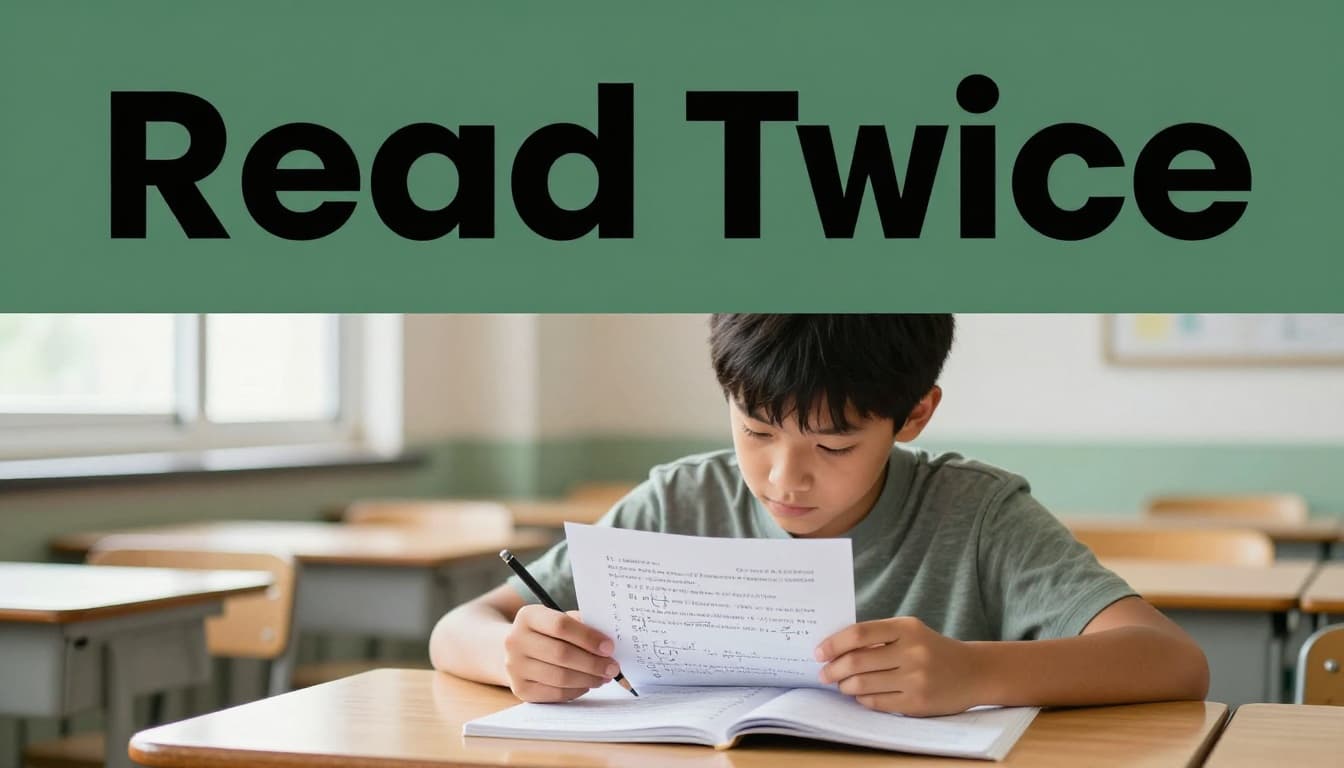
This approach fits the CUBES method teachers use now. Circle numbers. Underline questions. Box key words. Evaluate extra info. But pair it with slow reading for best results.
Spot Key Details Without Getting Overwhelmed
Highlight only what matters. Draw a line under numbers like 25 kids or 15 pizza slices. Note relationships, such as “part of the whole.”
In “Sara buys 12 apples, eats 4, gives 3 away,” underline 12, 4, 3. The question asks “how many left?” So, focus on subtract. Skip “at the market” details. This avoids overload.
Teachers warn against keyword traps early. “More” does not always mean add. Check the story first. Use a notebook margin for quick notes: “total kids = 25, pizza = 15.”
Practice this, and confusion fades. You see the core fast.
Draw Pictures and Diagrams to See the Story Come Alive
Words trick your brain. Pictures make the story clear. Visualization turns confusion into simple math. Students who sketch diagrams solve problems 29% better, per recent studies.
Start with basics. Draw objects or boxes. For “5 apples plus 3 more,” sketch five circles, add three. Count total: 8. This builds understanding beyond keywords.
In 2026, teachers push visuals for deep thinking. Use them for sharing pizza or buying toys. Pictures handle multi-step problems too. They show if you add or subtract before you calculate.
Try everyday scenes. “Dad drives 20 miles to work, 20 back. Total miles?” Draw a line: 20 out, 20 back. Add to 40. No guessing.
For more on strip diagrams as a strategy, check teacher resources. They fit real classrooms.
Benefits stack up. Pictures free your mind. They work when numbers change. Sketch along as you read.
Try the Part-Part-Whole Box for Quick Clarity
Grab paper. Draw a box. Label “whole” on top. Parts go on sides.
Example: Party cake. 10 kids eat cake. 15 do not. Total kids? Parts: 10 and 15. Whole: add to 25.
Missing part? Subtract from whole. “25 kids total, 10 eat cake. How many skip it?” Draw box: whole 25 top, cake 10 one side. Other side: 15.
This method shines for add or subtract. Label clearly. It prevents swaps.
Strip Diagrams and Lists for Tougher Stories
Strips show groups. Draw a long bar for total. Split for parts. Good for multiply or divide.
“24 cookies, share among 6 kids equally.” One long strip: 24. Divide into 6 equal parts: 4 each.
Lists help steps. Numberless first: “Sara has some apples, gets more from Tom.” Draw empty boxes. Add numbers later: Sara 5, Tom 3. Total 8.
Cover numbers at start. This builds logic. Teachers love it for multi-step.
Pick the Right Operations and Solve Without Second-Guessing
Visuals guide operations now. Keywords help but mislead alone. Always picture first.
Common clues exist. But context rules. Two parts, no whole? Add. Whole and part? Subtract.
Break multi-step into chunks. Plan on paper. Solve. Check if it fits.
Recent teacher guides list powerful strategies for 2026. They mix visuals with logic.
Example: Trip adds 45 miles day one, 30 day two. Total? Picture road: 45 + 30 = 75.
Cookies: 24 total, share 4 kids. Divide: 6 each.
Use fact families. 5 + 3 = 8, so 8 – 3 = 5. Multiple paths build confidence.
| Operation | Clues in Stories | Quick Example |
|---|---|---|
| Add | total, combined, altogether | 5 apples + 3 = 8 total |
| Subtract | difference, left, how many more | 12 – 4 = 8 left |
| Multiply | times, each, groups of | 6 kids x 4 cookies |
| Divide | share equally, per | 24 cookies / 6 kids |
This table speeds choices. Match to your picture.
Smart Keywords That Actually Help
Look for phrases like “in all” for add. “Share equally” signals divide. “Twice as many” means multiply.
But verify. “More than” might subtract if it asks difference.
| Phrase | Likely Operation |
|---|---|
| total, sum | add |
| difference, remains | subtract |
| each, every | multiply |
| per, split | divide |
Use after visuals.
Handle Multi-Step Problems Like a Pro
Chunk it. List steps.
“Bake 48 cookies. Share 8 per box. How many boxes?”
Step 1: 48 total.
Step 2: Divide by 8 = 6 boxes.
Example: Shop $20 toys, tax 10% more, discount 20%. Picture costs step-by-step.
Solve one part. Plug into next.
Dodge Common Traps and Practice with Real Examples
Top mistakes kill progress. Keyword traps: “more” not always add. Fix: visualize first.
Skip reading? Reread twice. No check? Ask, “Does 15 pizza eaters fit 25 kids?” Yes.
One operation only? Break multi-step. No picture? Sketch always.
Real examples build skill. Shopping: $30 shirt, 20% off. Picture full price minus discount: $24.
Party: 30 guests, 5 pizzas, 8 slices each. Total slices: 40. Not enough? Buy more.
Trip: 150 miles out, half back. 75 return.
Multi-step: Bake 36 cookies, eat 12, share rest equally 4 friends. Left: 24. Each: 6.
In 2026, use apps or task cards for fun practice. Rich tasks like summer plans boost scores. Aim daily for tests like ACT.
Try these now. Explain your thinking aloud.
Conclusion
Master word problems with four steps: read twice, draw pictures, pick smart operations, check answers. Visuals and slow reading cut confusion most.
You gain confidence for school and life. Budget trips. Split bills. Math feels real.
Try the party or shopping examples today. Share your wins in comments. Bookmark this for homework help. Next, tackle algebra word problems. You got this.