Remember that algebra test in school? You stared at a mess of x’s and numbers, felt lost, and wished for a simple fix. You’re not alone. Many students hit that wall.
Simplifying algebraic expressions just means rewriting them shorter. You combine matching parts without changing the value. An algebraic expression mixes variables like x, numbers, and operations such as + or -. No equals sign here, unlike equations.
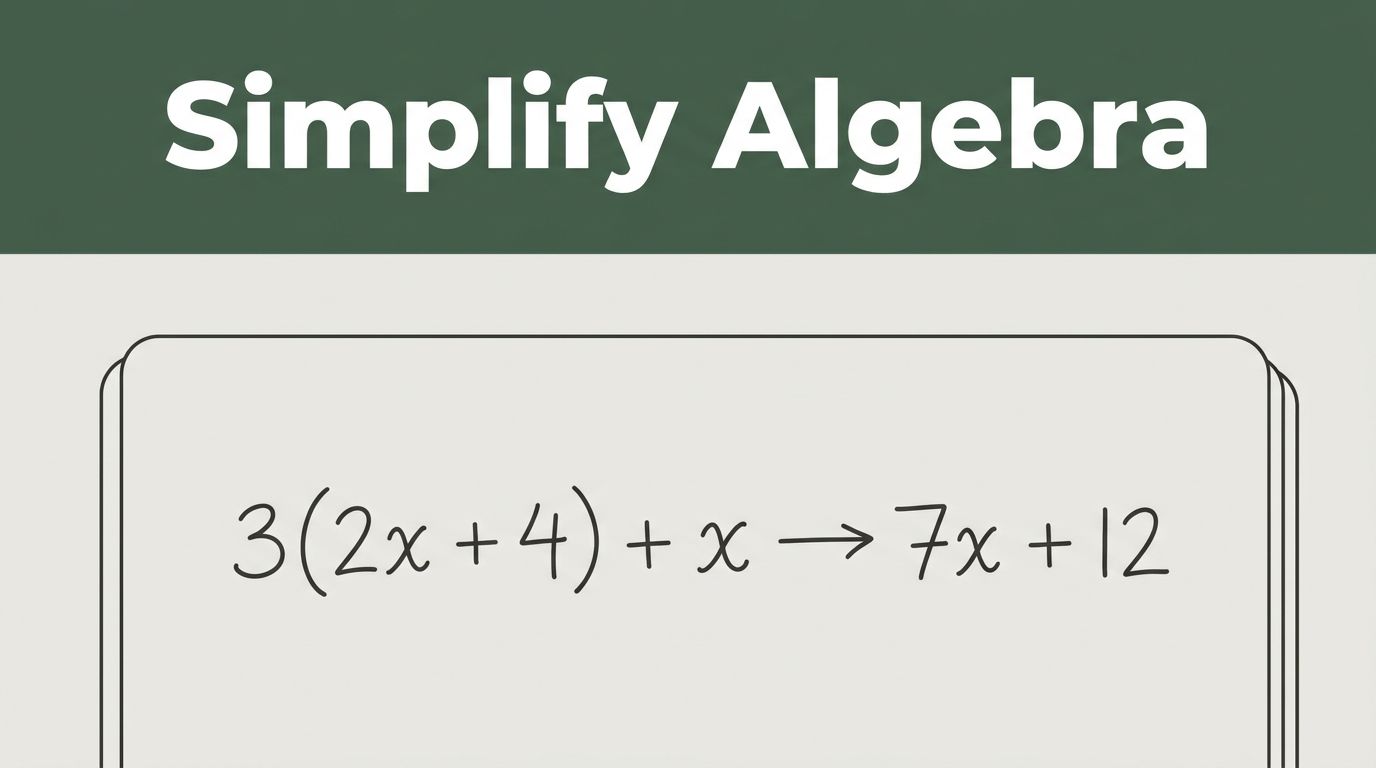
This guide breaks it down step by step. You’ll master PEMDAS, the distributive property, and like terms with real examples. By the end, you’ll simplify something like 3(2x + 4) + x into 7x + 12 effortlessly. Better grades and clearer math await. Let’s start with the basics.
Grasp the Basics: What Does It Mean to Simplify an Expression?
An algebraic expression looks like 2x + 3 or 5y – 7. It holds variables, constants, and math symbols. Simplifying makes it compact. You remove parentheses, handle exponents, and group similar terms.
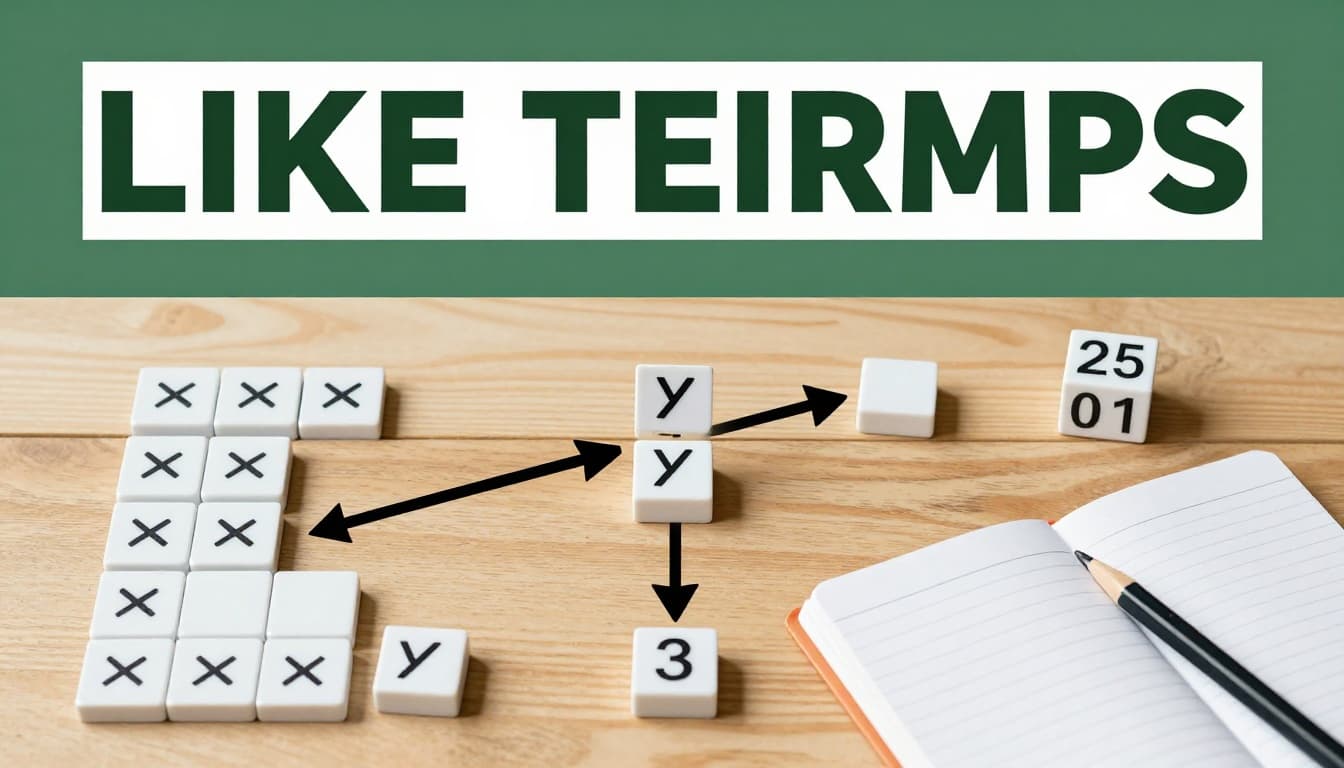
Like terms share the same variable and power. For example, 3x and 5x match because both have x to the first power. But 3x and 3x² do not. Constants like 4 and 7 also pair up.
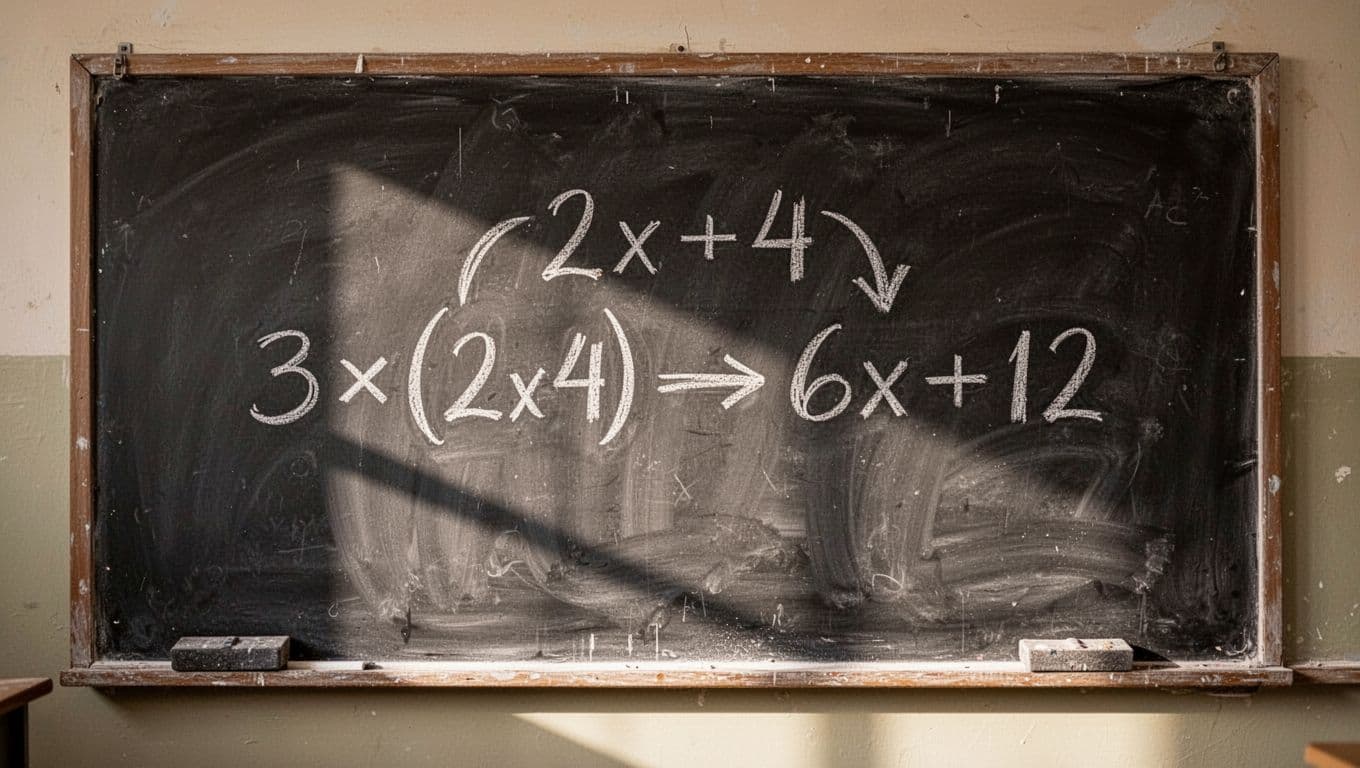
Take 3(2x + 4). Distribute to get 6x + 12. Now it’s simpler. No parentheses remain.
This matters because shorter forms help solve equations faster. Imagine plugging into a formula later. Clean expressions save time.
Here’s a quick way to spot likes:
| Like Terms | Unlike Terms |
|---|---|
| 2x, -5x, x | x, x², 3y |
| 7, -2, 10 | 4, 2x, y |
For more examples on simplifying basics, check this guide.
Follow PEMDAS Every Time to Nail the Order of Operations
Order keeps math consistent. PEMDAS rules it: Parentheses first, then Exponents, Multiply/Divide left to right, Add/Subtract left to right.
Think of it like a recipe. Skip steps, and dinner fails. Always start inside parentheses.
- P: Clear brackets fully.
- E: Simplify powers next.
- MD: Handle multiplication or division as you go.
- AS: Combine additions and subtractions last.
Practice on paper. Write each step. Results match every time.
Now, let’s zoom into each part.
Clear Parentheses First with the Distributive Property
Distribute means multiply outside by everything inside. So a(b + c) becomes ab + ac.
Try 3(2x + 4). Multiply 3 by 2x to get 6x. Then 3 by 4 for 12. Result: 6x + 12.
Watch negatives too. For -2(x – 3), you get -2x + 6. The minus flips signs inside.
Here’s a practice run: 4(y + 2) – y. Distribute to 4y + 8 – y. Then combine later.
Another example from this study guide: x(6 – x) – x(3 – x) simplifies to 6x – x² – 3x + x², which cancels nicely.
Do parentheses fully before anything else. Otherwise, chaos follows.
Simplify Exponents Before Moving On
Exponents show repeated multiplication. Same base? Add powers when multiplying.
For instance, x² * x³ equals x^(2+3) or x^5. But (x²)² becomes x^(2*2) or x^4.
Only same bases combine this way. x² and y² stay separate.
Most beginner expressions use simple ones. Handle them right after parentheses.
Example: 2x² * x becomes 2x³. Quick and easy.
Keep it basic. Practice builds speed.
Hunt Down and Combine Like Terms
Like terms group together. Add or subtract their numbers, called coefficients.
See 5x + 2x – 3x. Combine to (5 + 2 – 3)x or 4x.
Constants work the same. 4 + 7 – 2 equals 9.
Full try: 7h + 28t – 9t. Group t terms: 28t – 9t = 19t. So 7h + 19t.
First distribute if needed. Like 2(x + 3) + 4x – x. Step one: 2x + 6 + 4x – x. Now x’s: 2x + 4x – x = 5x. Plus 6. Final: 5x + 6.
Tip: Circle likes first. Or use colors.
For visual help on expanding and simplifying, see this page.
Put It All Together: Step-by-Step Examples You Can Try Now
Ready to practice? Follow these full examples. Pause after each step. Try on your own first.
Use a table to track progress:
| Original Expression | After Parentheses/Exponents | Final Simplified |
|---|---|---|
| 3(5 + p) – 4p + 3p | 15 + 3p – 4p + 3p | 15 – p |
| 2x² + 3x – x² | Same (no parens) | x² + 3x |
| 6(4m + 7) – 30 | 24m + 42 – 30 | 24m + 12 |
First one: Start with parentheses. 3 times 5 is 15, 3 times p is 3p. Then -4p + 3p cancels to -p. Plus 15.
Second skips parens. Combine x² terms: 2 – 1 = 1, so x². 3x stays.
Now tackle yours.
A Beginner-Friendly Example with Parentheses and Like Terms
Pick 2(x + 3) + 4x – x.
- Distribute: 2x + 6 + 4x – x.
- Group x terms: 2x + 4x – x = 5x.
- Constants: Just 6.
Result: 5x + 6.
See how PEMDAS guides? Parentheses first led the way.
Tackle an Expression with Exponents Included
Try x² * x * (2x + 1).
- Distribute inside: x² * x * 2x + x² * x * 1 = 2x³ + x³? Wait, first multiply exponents outside.
Actually, x² * x = x³ first (after parens? Parens last here? No, distribute parens.
Better: Distribute (2x + 1) by x³? Wait, rewrite as x³(2x + 1) since x² * x = x³.
Then: 2x^4 + x³.
Exponents multiply bases carefully. Check work by expanding back.
For a full comprehensive guide with examples, visit here.
Dodge Common Mistakes That Trip Up Most Beginners
Students often rush PEMDAS. They combine terms before distributing. Wrong: Treat 7(x + 1) – 4x + 2x as 7x + ( -4x + 2x) +7. No. Distribute first: 7x + 7 -4x +2x = 5x +7.
Forget signs. In 3x + 2 – x, grab -x with 3x for 2x +2.
Mix unlike terms. x and x² differ. x and y never combine.
Distribute negatives wrong. -2(3 + x) is -6 -2x, not +.
Here’s a fix table from best practices:
| Mistake | Fix Example |
|---|---|
| Skip distribute | 4(8 – k) = 32 -4k, then combine |
| Ignore signs | +2x – x = +x, include the minus |
| Unlike terms | x + x² stays as is |
| Bad negatives | – (x + 3) = -x -3 |
Circle terms. Write steps. Plug in numbers to check, like let x=2.
For more on common pitfalls, read this step-by-step.
Master Simplifying and Build Confidence Now
You now know PEMDAS, distributing, exponents, and like terms. Practice turns these into habits.
Grab paper. Try the examples again. Spot mistakes early.
Share your simplified expression in the comments. What’s your toughest one? Subscribe for more algebra wins. You simplify algebraic expressions easily from here on.