
Picture this. You plan a road trip across Europe. Your GPS shows 100 kilometers to the next stop. But your odometer reads miles. Panic sets in as you wonder if you’ll run out of gas. Or think about baking cookies from a British recipe. It calls for grams of flour. Your kitchen has cups. These mix-ups happen all the time.
Units measure distance, weight, volume, and more in daily life. Conversions bridge the gaps between them. Yet they trip up students, cooks, and travelers alike. You don’t need a math degree to fix that. This guide shares simple tricks like dimensional analysis and fun mnemonics. You’ll learn the main unit systems, pro conversion steps, handy tips, and real-world uses.
Break Down the Two Main Unit Systems
Most countries use the metric system, also called SI. It bases everything on powers of 10. That makes conversions straightforward. You shift decimals left or right. Base units include the meter for length, gram for mass, and liter for volume.
The US sticks with imperial units. They stem from old English measures. Factors don’t follow neat patterns. For example, 12 inches make a foot. Three feet form a yard. This setup confuses quick math.
Metric wins for science and global trade because of its logic. Imperial persists in everyday US tasks like construction or recipes. Knowing both helps you navigate life here.
For a full breakdown, check this complete guide to metric vs imperial systems.
Master Metric Prefixes with a Silly Story
Metric prefixes scale base units up or down. A handy mnemonic? “King Henry Died By Drinking Chocolate Milk.” Each word stands for a prefix: kilo, hecto, deca, base, deci, centi, milli.
Here’s a quick table:
| Prefix | Symbol | Factor | Example |
|---|---|---|---|
| kilo | k | 1,000 | kilometer (km) |
| hecto | h | 100 | hectometer (hm) |
| deca | da | 10 | decagram (dag) |
| (base) | – | 1 | meter (m) |
| deci | d | 0.1 | deciliter (dl) |
| centi | c | 0.01 | centimeter (cm) |
| milli | m | 0.001 | millimeter (mm) |
To convert within metric, move the decimal. Take 4.5 kg to grams. Kg sits three spots left of base. Shift decimal right three places: 4500 g. Easy, right? Practice builds speed.
Tame the Quirky Imperial Units
Imperial lacks that decimal magic. Length goes inches, feet, yards, miles. Weights use ounces, pounds, tons. Volume has cups, pints, quarts, gallons.
Key facts: 12 inches per foot, 16 ounces per pound (weight), 8 ounces per cup (volume). A yard equals 3 feet. Miles? 5280 feet. These odd numbers demand memorized ratios.
Crossovers like miles to kilometers need fixed factors. One mile equals about 1.609 kilometers. You’ll see why methods like dimensional analysis shine next.
Convert Units Like a Pro with Dimensional Analysis
Dimensional analysis acts like a secret weapon. You multiply by conversion factors that equal 1. Units cancel out diagonally, leaving what you want. Always write units first. They guide the math.
Rule of thumb: Going big unit to small? Multiply. Small to big? Divide. Then check if the answer fits reality. Five feet shouldn’t become 60 inches? Wait, it does. But 5 feet to 0.5 inches? No way.
This method works across systems. No guesswork.
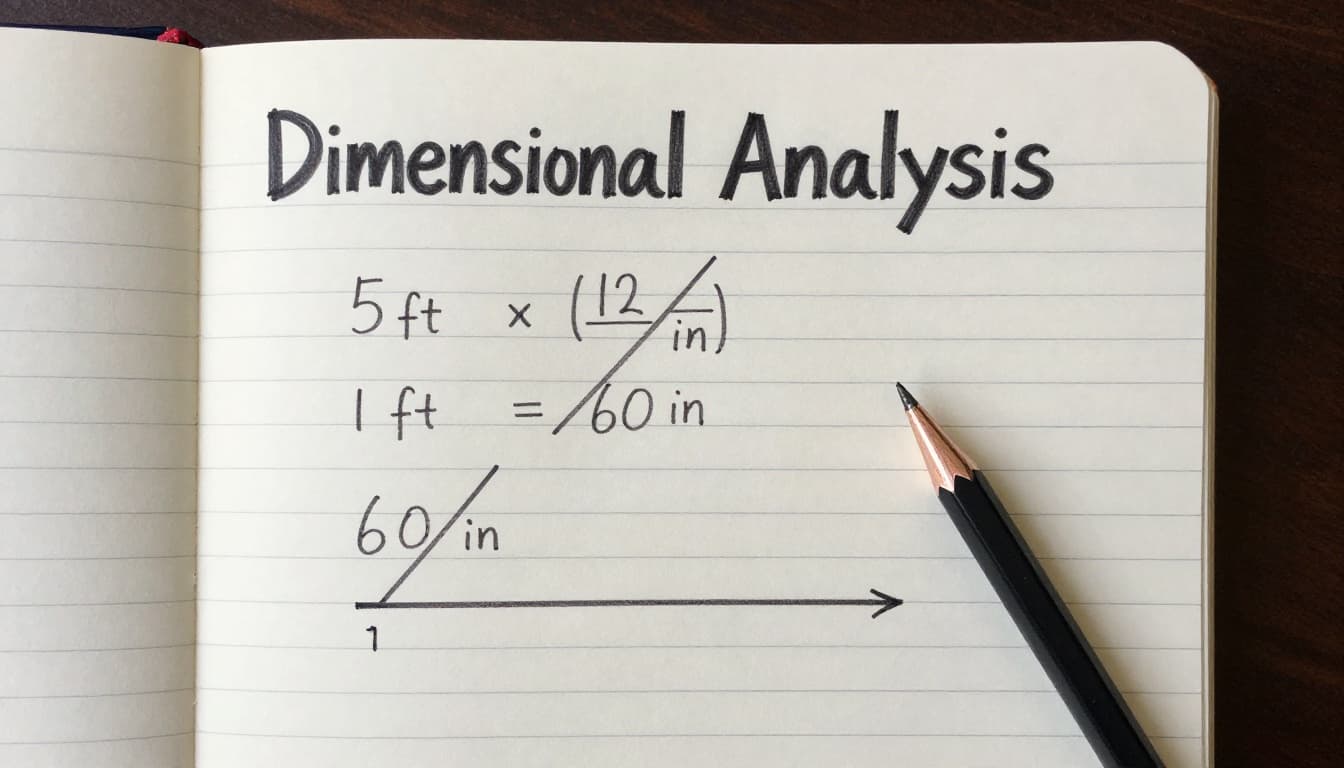
See a clear dimensional analysis tutorial here.
Follow These Four Easy Steps
- Start with your value and unit. Say, 5 feet.
- Multiply by a conversion factor. Put the desired unit on top: 5 ft × (12 in / 1 ft).
- Cancel matching units diagonally. Ft crosses out.
- Multiply the numbers. Repeat for multi-step needs. 5 × 12 = 60 inches.
Arrows help visualize: ft cancels, leaves inches.
See It in Action with Everyday Examples
Try 2 km to meters: 2 km × (1000 m / 1 km) = 2000 m.
72 inches to cm? 72 in × (2.54 cm / 1 in) = 182.88 cm.
16 fl oz to cups: 16 fl oz ÷ (8 fl oz / 1 cup) = 2 cups. Or multiply by inverse.
3 miles to km: 3 mi × (1.609 km / 1 mi) = 4.827 km.
Each time, units vanish. Numbers crunch simple. Sense-check seals it.
Grab Memorable Tricks and Sidestep Common Mistakes
Memorize core factors: 1 in = 2.54 cm, 1 kg = 2.2 lb, 1 L = 1.057 qt. Anything over itself equals 1. Flip for the right direction.
Practice daily. Check grocery labels in lb and kg. Track runs in miles or km.
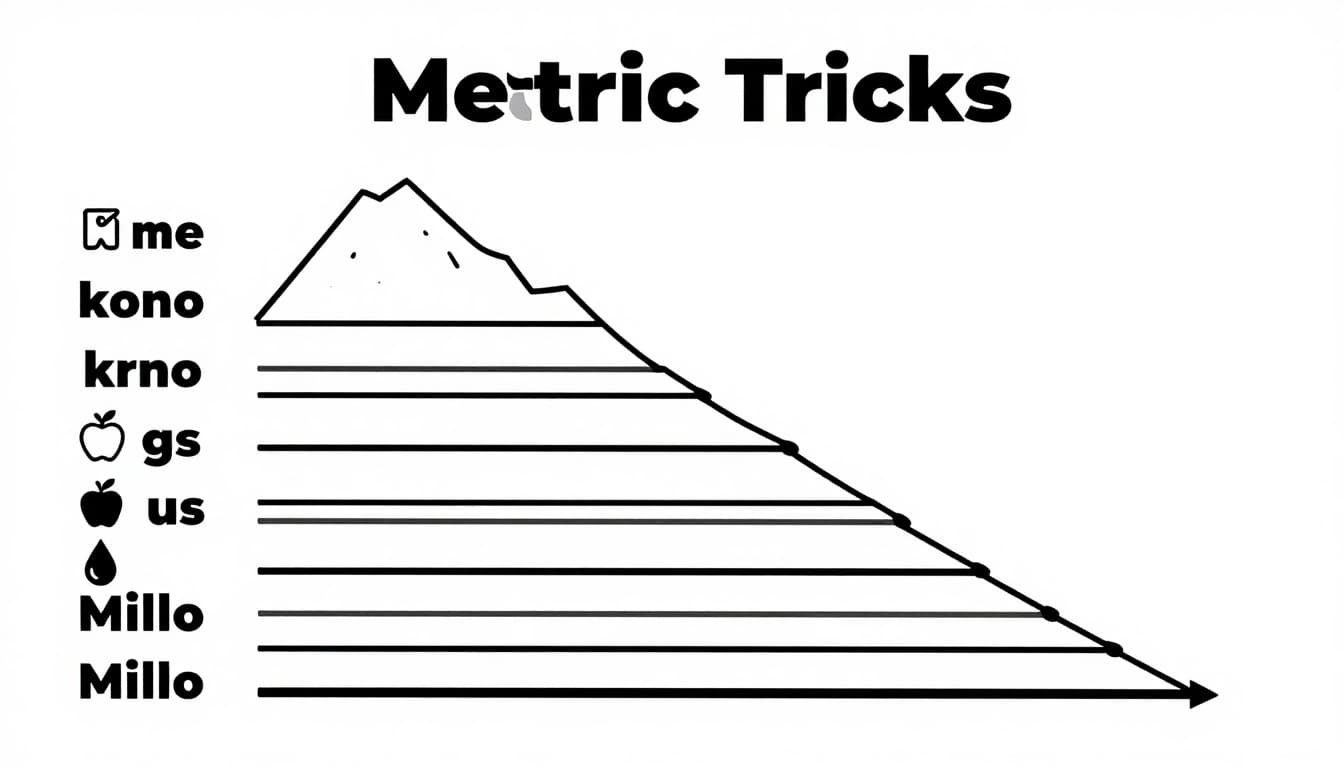
Funny Mnemonics to Lock in Prefixes and Rules
Stick with King Henry for metric. Rhyme: “Big to small, multiply by all.” Small to big? Divide.
Write units before numbers. Always. Check sense: 100 km equals about 62 miles, not 6200.
Spot and Fix the Top Conversion Traps
Top error: Skip canceling. Fix: Draw lines every time.
Mix multiply/divide? Remember the rule. Test with known facts.
Wrong factor for squares/cubes? Convert sides first. Area? (in × 2.54)^2 for cm².
For more, read about common unit conversion mistakes.
Apply Conversions to Real Life for Lasting Confidence
Cooking demands them. Oz to grams for chocolate? 4 oz × 28.35 g/oz = 113.4 g.
Travel? 60 miles to km: 60 × 1.609 = 96.54 km.
Shopping? Lb of apples to kg: 2 lb × 0.4536 kg/lb = 0.907 kg.
Sports track runs both ways. Apps help too. Top ones include Unit Converter – Best Unit App for iOS and Unit Converter All in One for Android. They handle offline conversions fast.

Baking pros use charts like this cooking measurements guide.
Try one today. Convert your height to cm or a recipe weight. Confidence grows quick.
Master the systems and dimensional analysis. Apply tips daily. You’ll dodge pitfalls forever.
Units feel simple now, don’t they? Share your worst conversion story in the comments. Subscribe for more everyday math hacks.