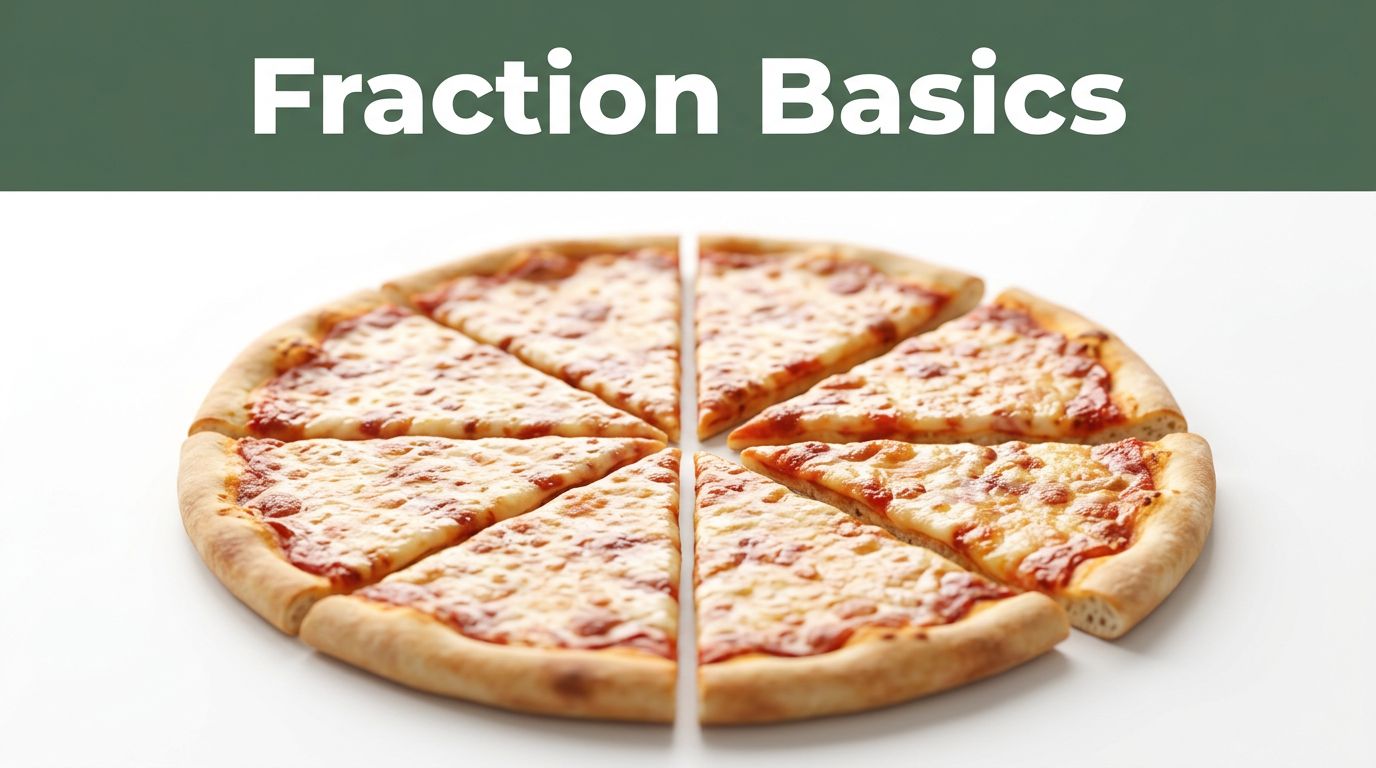
Imagine you order a pizza with friends. You cut it into eight equal slices. Everyone grabs three slices. That’s 3/8 of the pizza. Fractions pop up everywhere like this. They describe parts of a whole. Yet they confuse many beginners.
You might stare at 1/2 or 3/4 and wonder what they mean. Don’t worry. Fractions seem tough at first. Simple visuals and steps make them clear fast. You’ll see why the top number counts parts you take. The bottom shows total parts.
By the end, you’ll handle basics, math operations, and common traps. You’ll gain math confidence. Plus everyday skills for cooking or shopping improve. We start with everyday examples. Then visuals bring fractions to life. Next come easy math steps. We’ll dodge mistakes and add practice ideas.
Grasp What Fractions Mean Using Everyday Examples
Fractions show parts of something whole. Think of a candy bar split evenly. You take two pieces out of four. That’s 2/4, or half the bar. The key stays equal parts always.
The numerator sits on top. It counts parts you select. The denominator goes below the line. It tells total equal parts. In 3/8 pizza, three means slices you eat. Eight means all slices.
Real life ties help. Halve a recipe? Use 1/2 cup flour. Split a bill four ways? Each pays 1/4. These examples build sense before numbers.

Spot the Numerator and Denominator Every Time
Look at the top number first. That’s your numerator. It says how many parts you grab. Bottom number, denominator, sets the total.
Take that pizza again. Eight slices total, so denominator equals 8. You pick three, numerator is 3. Write it as 3/8. Easy.
Try a chocolate bar in five pieces. Eat two. Numerator two, denominator five: 2/5. Picture it divided straight across. No guesswork.
For more fraction visuals in daily life, check Rise Over Run’s fraction concepts guide. It shows teacher tips.
Know Proper, Improper, and Mixed Fractions Fast
Proper fractions stay under one. Numerator smaller than denominator, like 1/4. You have less than a whole.
Improper fractions go over one. Top bigger, such as 5/4. More parts than total groups.
Mixed numbers mix whole and fraction. See 1 1/4. One whole plus one-fourth.
Convert improper to mixed. Take 5/4. Four goes into five once with one left. So 1 1/4. Bars help: shade five out of four units, regroup.
See Fractions Come Alive with These Visual Tools
Visuals turn abstract fractions real. Recent trends favor hands-on tools. Teachers use manipulatives like fraction tiles before rules. This builds deep understanding.
Pizza circles show halves. Number lines place fractions between zeros and ones. Paper folds or object groups make equals clear. Try these at home. They match 2026 shifts to area models.
Fraction circles stack for comparisons. Playdough shapes equal parts. Legos build fraction walls. Touching pieces cements ideas.
Draw Circles and Shapes to Picture Parts of a Whole
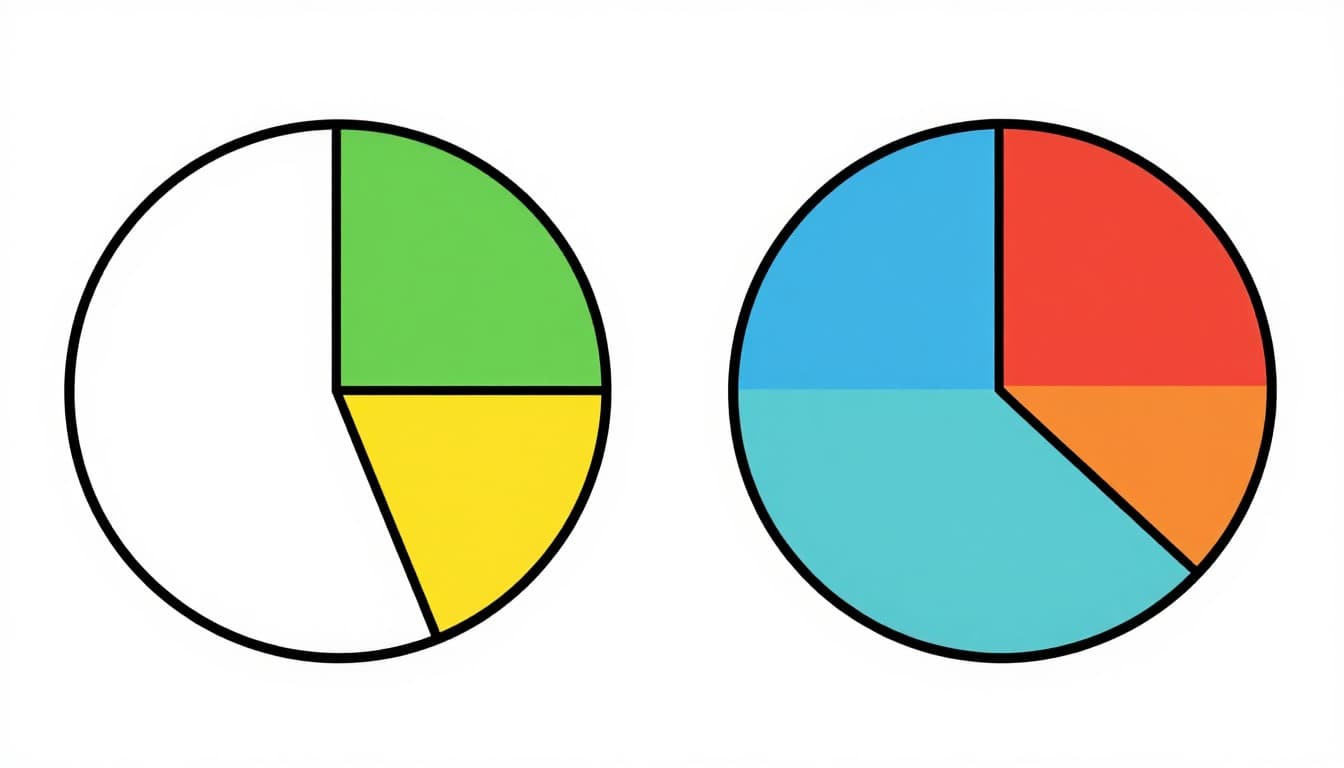
Grab paper and pencil. Draw a circle. Divide into four equal parts with lines from center. Shade one slice. That’s 1/4.
Now draw another circle. Split into two. Shade half. Compare. The 1/2 covers twice the area of 1/4. See it?
Practice thirds. Divide circle into three. Shade one. Next to halves, 1/3 looks smaller. Shapes reveal sizes fast.
Use Number Lines to Place Fractions Where They Belong
Draw a line from 0 to 1. Mark the middle for 1/2. Add ticks at 1/4 and 3/4.
Place 1/4 closer to zero. 1/2 sits center. Now compare 1/4 and 1/2. One jumps farther right.
Number lines shine for ordering. 1/3 falls between 1/4 and 1/2. Tick it at one-third spot.

Fold Paper or Use Objects for Hands-On Fun
Take a strip of paper. Fold into thirds. Creases make equal parts. Color one section. You hold 1/3.
Group 12 candies. Take four. That’s 4/12, simplifies to 1/3. Same as folded paper.
Use markers or blocks. Eight total, three selected: 3/8. Hands-on reveals patterns naturally.

Master Fraction Math One Easy Step at a Time
Start with visuals for operations. Equivalents come first by scaling parts. Compare uses pictures or common bottoms. Add and subtract match sizes. Multiply areas. Divide flips.
Candy bars or strips guide each step. Always picture before calculating.

Find Equivalent Fractions Without Confusion
Take 1/2 bar. Split each half into two. Now shade two of four: 2/4 equals 1/2. Double again to 4/8.
Multiply top and bottom by same number. 1/2 times 3/3 equals 3/6. Tiles stack to prove it.
Compare Any Two Fractions Side by Side
Visual first. Shade 1/2 circle next to 1/3. Half wins bigger.
Same denominator? Larger top takes it: 3/5 over 2/5. Different bottoms? Convert or cross-multiply carefully.
Add and Subtract by Matching Piece Sizes
1/4 plus 1/4 makes 2/4 or 1/2. Easy match.
Tougher: 1/3 plus 1/6. Turn 1/3 to 2/6. Add: 3/6 or 1/2. Strips show the switch.
Subtract same way. 3/4 minus 1/4 equals 2/4 or 1/2.
Multiply and Divide Fractions Like a Pro
Multiply: half of 3/4. Shade half the 3/4 area: 3/8. Or groups: two 3/4 make 6/4 or 3/2.
Divide: 1/2 divided by 1/4. Flip second to multiply: 1/2 times 4/1 equals 2. Strips confirm twice as much.
Dodge These Sneaky Fraction Mistakes Beginners Make
Beginners add wrong. They do 1/2 plus 1/3 as 2/5. Nope. Cross adding skips common bottoms.
Don’t forget wholes. 1/2 plus 1/2 equals 1, not 2/4 left alone. Regroup.
Unequal parts fool too. Halves must match sizes. Use Playdough to check.
For common adding errors, see NFER’s fraction mistakes analysis. Visuals fix most slips.
Check work on number lines. Fractions live between wholes. Practice spots errors quick.
Practice Fractions Daily with Fun Games and Tools
Make habits stick. Play fraction bingo with cards. Hunt household fractions: 1/2 cup milk.
Apps shine in 2026. Fractions by MLC lets you split and shade free. Slice Fractions puzzles teach ops without reading.
Try Number Frames online. Cuisenaire rods or board games add fun.
Real life counts. Halve recipes. Track sports stats like 3/10 shots made.
For app ideas, explore A Sked Guy’s fraction tools list.
Visuals and steps master fractions. You avoid traps now. Practice builds speed.
Fractions unlock cooking, budgeting, even algebra later. Grab paper or an app today. Try shading 1/3. Share what clicks in comments. You’ve got this.