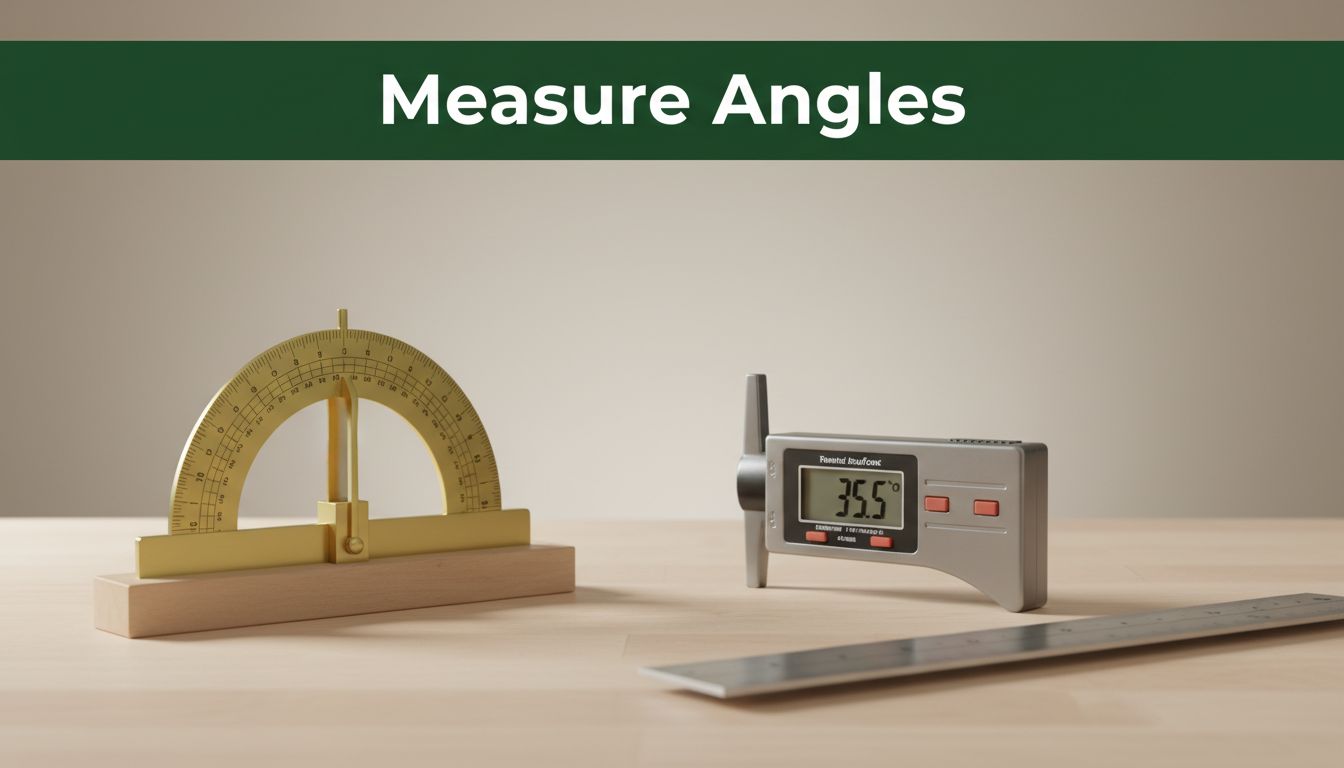
You grab your saw to cut a perfect 45-degree angle for that birdhouse. The board comes out crooked. Frustration hits because you guessed the angle wrong.
Angles form the space between two lines that meet at a point. We measure them in degrees. You need this skill for school geometry, DIY fixes, woodworking cuts, or even hanging shelves level.
This post covers angle basics first. Then you learn top tools like protractors and 2026 digital finders. Next come steps to solve common problems. You’ll finish ready to measure and use angles anywhere.
Grasp Angle Basics Before You Measure
Start here to build confidence. An angle sits where two rays share a point called the vertex. Degrees mark the size, with a full circle at 360 degrees.
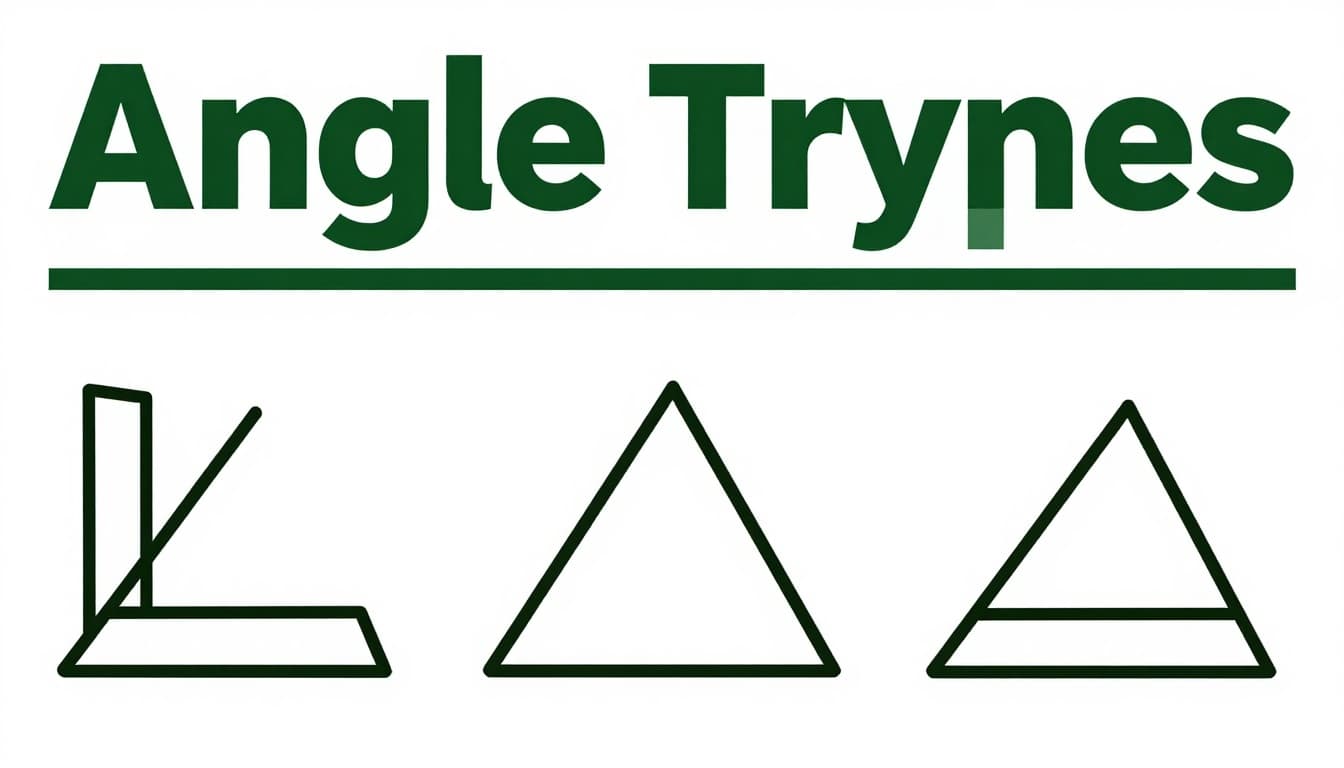
Acute angles stay under 90 degrees. Right angles hit exactly 90 degrees. Obtuse angles go over 90 but under 180. Straight angles measure 180 degrees flat. Reflex angles top 180 degrees.
Knowing these helps you pick the right tool and spot errors fast. Clock hands at 3 o’clock show a right angle. For more on types, check Science Notes on geometry angles.
Spot Common Angle Types in Everyday Shapes
Look around your home. A sharp pizza slice holds an acute angle. Book corners form right angles. An open door creates an obtuse angle.
Pizza tips stay skinny, so under 90 degrees. Square tables have right angles everywhere. Recliner chairs lean obtuse when half-open.
Practice this. Next time you see a corner, guess the type. It trains your eye before tools come in. Then measurement gets easier.
Understand Complementary and Supplementary Pairs
Some angles work together. Complementary pairs add to 90 degrees. Supplementary ones total 180 degrees.
Think of a right triangle corner. One angle at 30 degrees pairs with 60 degrees to make 90. On a door frame, angles add to 180 along the straight edge.
Vertical angles match when lines cross. Opposites stay equal.
Here’s a quick view:
| Pair Type | Adds To | Example |
|---|---|---|
| Complementary | 90° | 40° + 50° in a corner |
| Supplementary | 180° | 70° + 110° on a line |
These rules save time in problems. See Mathnasium’s guide on pairs for visuals.
Measure Angles Accurately with Top Tools in 2026
Tools make angles exact. Start simple, then go digital. Practice on paper angles first. Safety matters, so wear glasses for cuts.
Protractors work for school. Speed squares check quick rights. Digital finders lead in 2026 with 0.1-degree reads.
Klein Tools 935DAG tops sales at $33. It doubles as level. GemRed 82305 suits beginners at $20. Bosch GAM 270 MFL fits pros with memory.
Lasers like MiLESEEY add distance. Use for roof pitches or trim.
Master the Protractor for School Assignments
Draw your angle large. Grab a straight edge for rays.
Place the protractor’s center hole on the vertex. Line the zero mark with one ray. Read where the other ray hits the scale.
Inner scale works for most. Outer for reflex. Common fix: center it right, or reads skew 10 degrees off.
Steps stay basic:
- Align baseline.
- Hold steady.
- Note the degree.
For details, read Orchids International steps. Practice beats mistakes.
Pick and Use Digital Angle Finders Like a Pro
These beat manuals for speed. Screens show exact numbers. Magnets stick to metal.
Power on Klein 935DAG. Press against surfaces. LCD reads 0-180 degrees. V-groove fits pipes.
Bosch GAM 270 MFL stores angles. Use calc mode for miters.
Compare picks:
| Tool | Best For | Accuracy | Price | Key Perk |
|---|---|---|---|---|
| Klein 935DAG | Budget DIY | High | $33 | Level combo |
| GemRed 82305 | Beginners | ±0.1° | $20 | Lock dial |
| Bosch GAM 270 | Pros | ±0.1° | Higher | Memory & calc |
Klein leads Amazon sales. Check Rosenberry Rooms reviews for miter tips. Calibrate on flats first.
Try Apps and Laser Measurers for On-the-Go Checks
Phones work too. iPhone Measure app levels surfaces. Hold steady for tilt read.
MiLESEEY laser hits 229 feet. Angle sensor adds Pythagoras for heights.
Pair with Bluetooth. Measure wall lean for shelves. Apps save notes.
Bosch GLM165 focuses distance but pairs with finders. Test in light; shadows fool lasers.
Solve Geometry Problems Using Your Angle Measurements
Measurements feed math. Triangles sum 180 degrees. Lines hit 180. Verticals equal.
Measure drawn shapes to check. Tools confirm your work.
Start with basics. Then build speed.
Crack Missing Angles in Triangles Fast
All inside angles add 180 degrees. Subtract known from total.
Example: Angles A=40°, B=60°. Then C=180-100=80°.
Label sides if right triangle hints. 90° corner leaves 90° split.
Draw it. Measure to verify. Practice fixes sums wrong.
Tackle Lines, Verticals, and Pairs with Ease
Straight line: angles add 180. 110° leaves 70°.
Crossing lines: verticals equal. Adjacent supplementary.
Quick rules:
| Setup | Rule |
|---|---|
| Straight line | 180° total |
| Verticals | Opposites equal |
| Adjacent cross | Supplementary (180°) |
Measure crossings. Equals hold true.
Work Through Practice Problems Step by Step
Try these. Measure if drawn.
- Triangle: 50° and 70°. Find third. (60°: 180-120=60)
- Line pair: 125° next to unknown. (55°: 180-125=55)
- Frame miter: Cut 42° for corner. Pair needs? (48° for 90° total)
Solutions match rules. Draw, measure, solve. Builds skill.
Ready to Nail Every Angle
You now know angle types, from acute slices to obtuse doors. Tools like Klein 935DAG or protractors give precision. Problems solve with sums to 180 or pairs to 90.
Grab a protractor or app today. Measure a book corner. Check a drawer tilt. Solve a triangle sketch.
Confident cuts await your birdhouse. What angle will you tackle first? Share in comments. Dive deeper with geometry sites or tool tests.